
Quantum Science at European Researchers’ Night: From the First Booth to the Quantum Zone
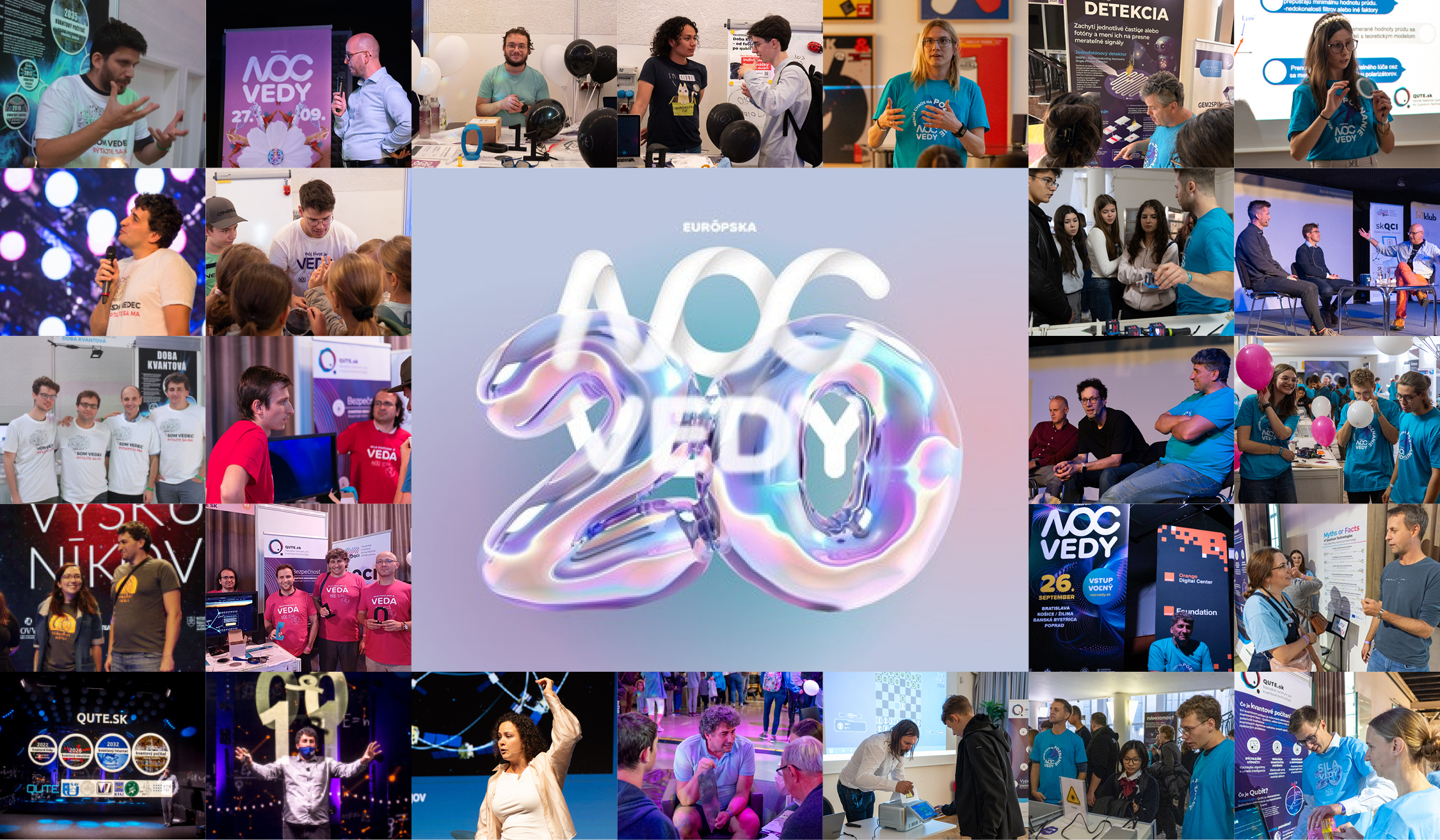
The team behind QUTE.sk has been engaging the public with quantum physics at European Researchers’ Night since 2017 through lectures, experiments, competitions and workshops. A major milestone came in 2025, when we joined forces with our partners to create an extensive Quantum Zone in celebration of UNESCO’s International Year of Quantum Science and Technology. In 2026, as European Researchers’ Night in Slovakia celebrated its 20th anniversary, we continued this tradition and welcomed a new partner: the Faculty of Management Science and Informatics at the University of Žilina (FRI UNIZA).
European Researchers’ Night has brought together scientists, students and the wider public for two decades. Its aim is to show that science need not be inaccessible or difficult to understand, but can open up a world of fascinating questions, discoveries and practical applications. For Slovakia’s scientific community, the event provides an important opportunity to introduce the public to its research and the technologies that emerge from it.
Although QUTE.sk – the National Center for Quantum Technologies – was established only in 2021, the researchers and teams that now form its foundation had already been participating in European Researchers’ Night for several years. Since 2017, we have been presenting quantum phenomena and technologies through a variety of public engagement activities, united by a shared ambition: to make the quantum world accessible, engaging and tangible to everyone.
From the Quantum Era and cipher challenges to an extensive Quantum Zone
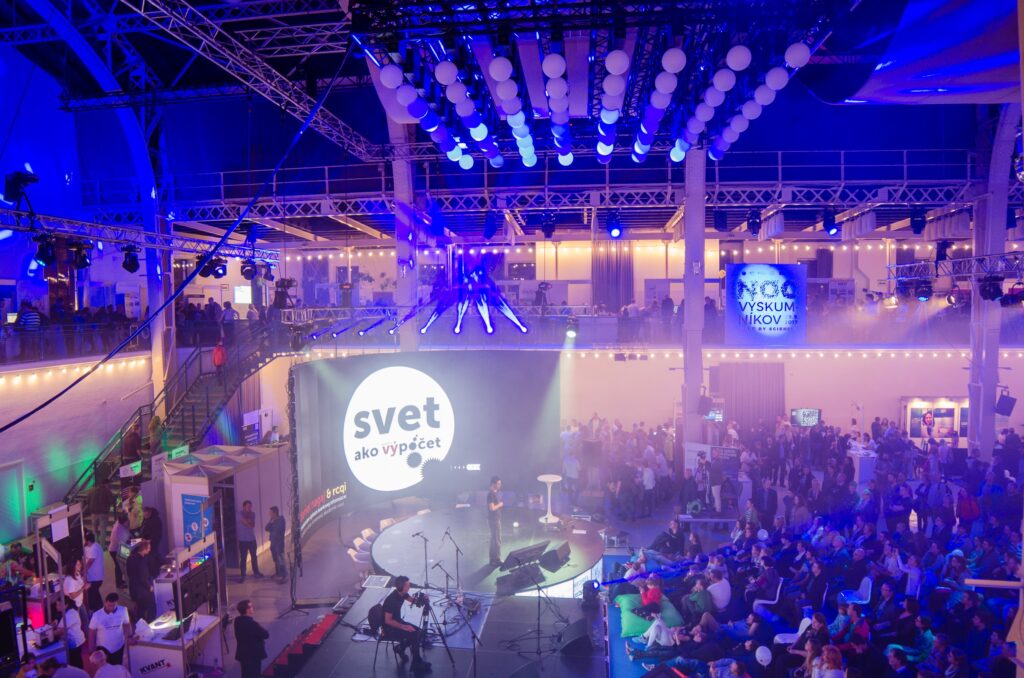
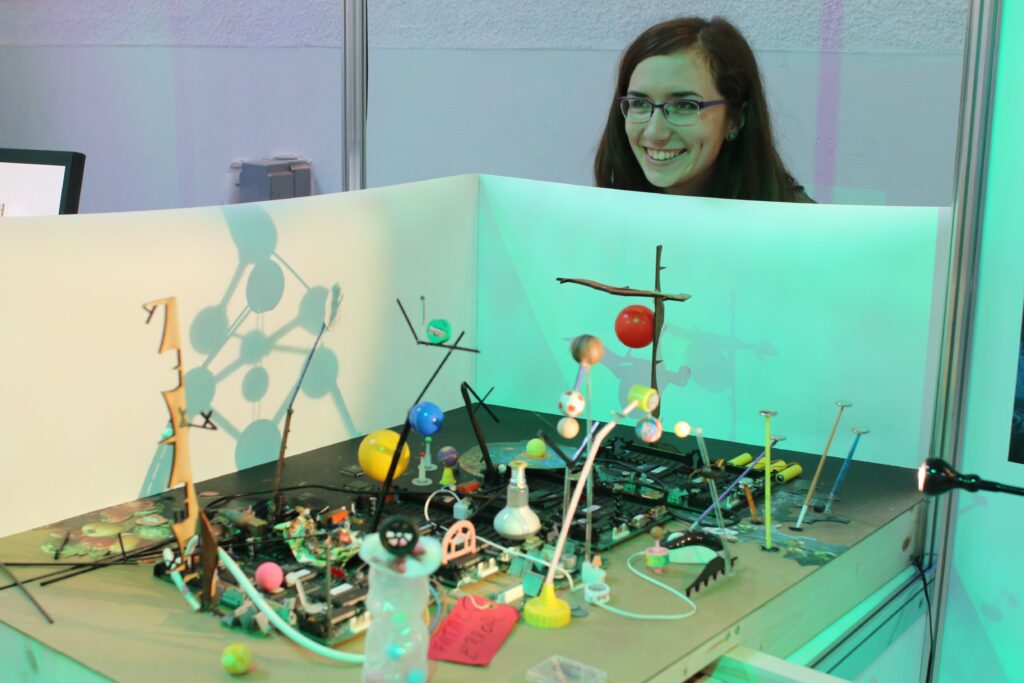
Our journey began in 2017, when the Research Centre for Quantum Information (RCQI) at the Institute of Physics of the Slovak Academy of Sciences took part in the European Researchers’ Night with an exhibition stand entitled The Quantum Era. At the time, public interest in quantum physics was being sparked by questions about future computers, teleportation and new possibilities for information processing. The programme also featured Mário Ziman’s lecture The Quantum World, accompanied by demonstrations of a kinetic light installation, and Daniel Nagaj’s lecture The World as Computation.
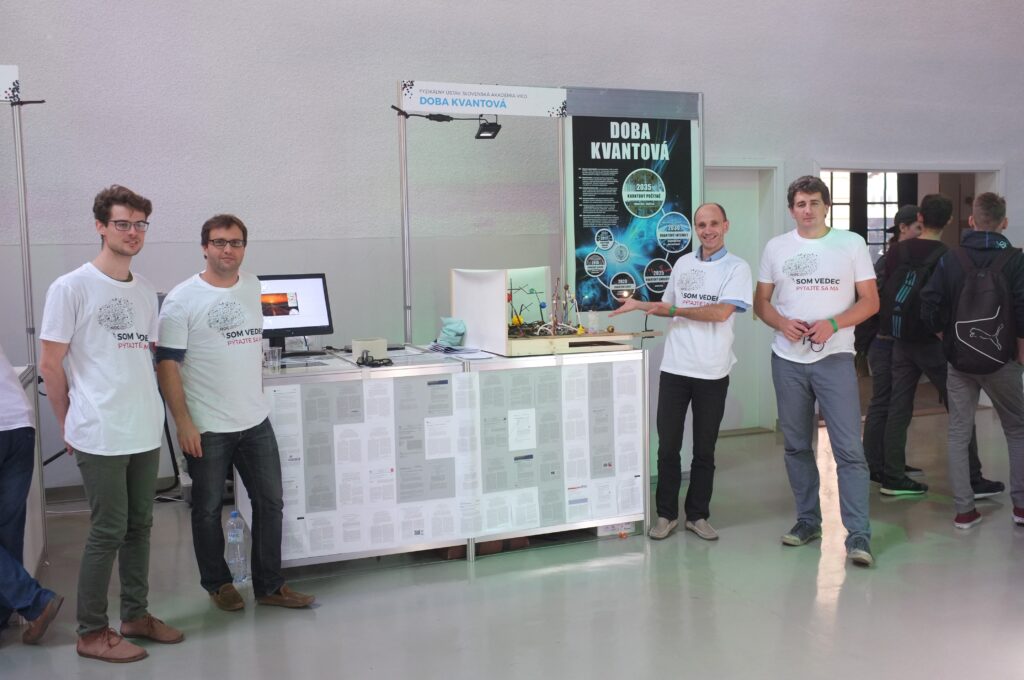
In 2018, the programme continued with the exhibition stand Quantum Technologies for Everyone and Daniel Reitzner’s lecture Quantum Information and Its Practical Applications. In 2019, we introduced an activity that stood out from conventional science exhibition stands: the cipher challenge D3$ifru7. Instead of simply listening to presentations, participants had the opportunity to put their logical thinking to the test, identify patterns and connections, and try to decipher encrypted messages.
Encryption and quantum communication are closely related fields, bringing together mathematics, computer science and physics while raising a question that matters in everyday life: how can information be transmitted securely? Challenges such as D3$ifru7 demonstrate that scientific discovery does not happen only in textbooks and laboratories. Often, it begins with simple curiosity, the search for patterns and a willingness to explore different solutions.
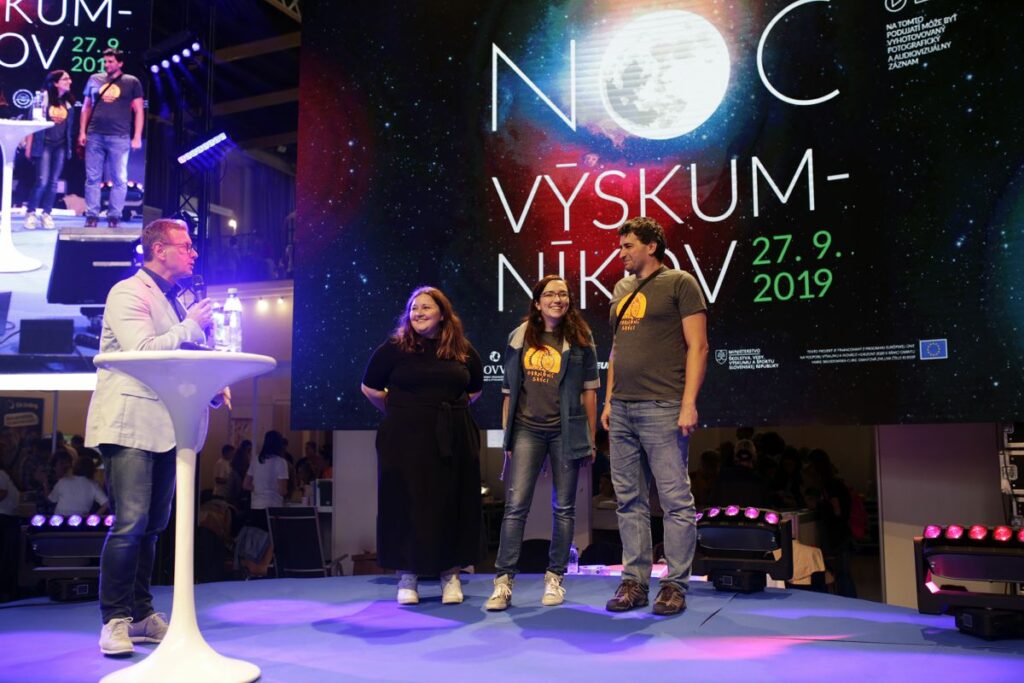


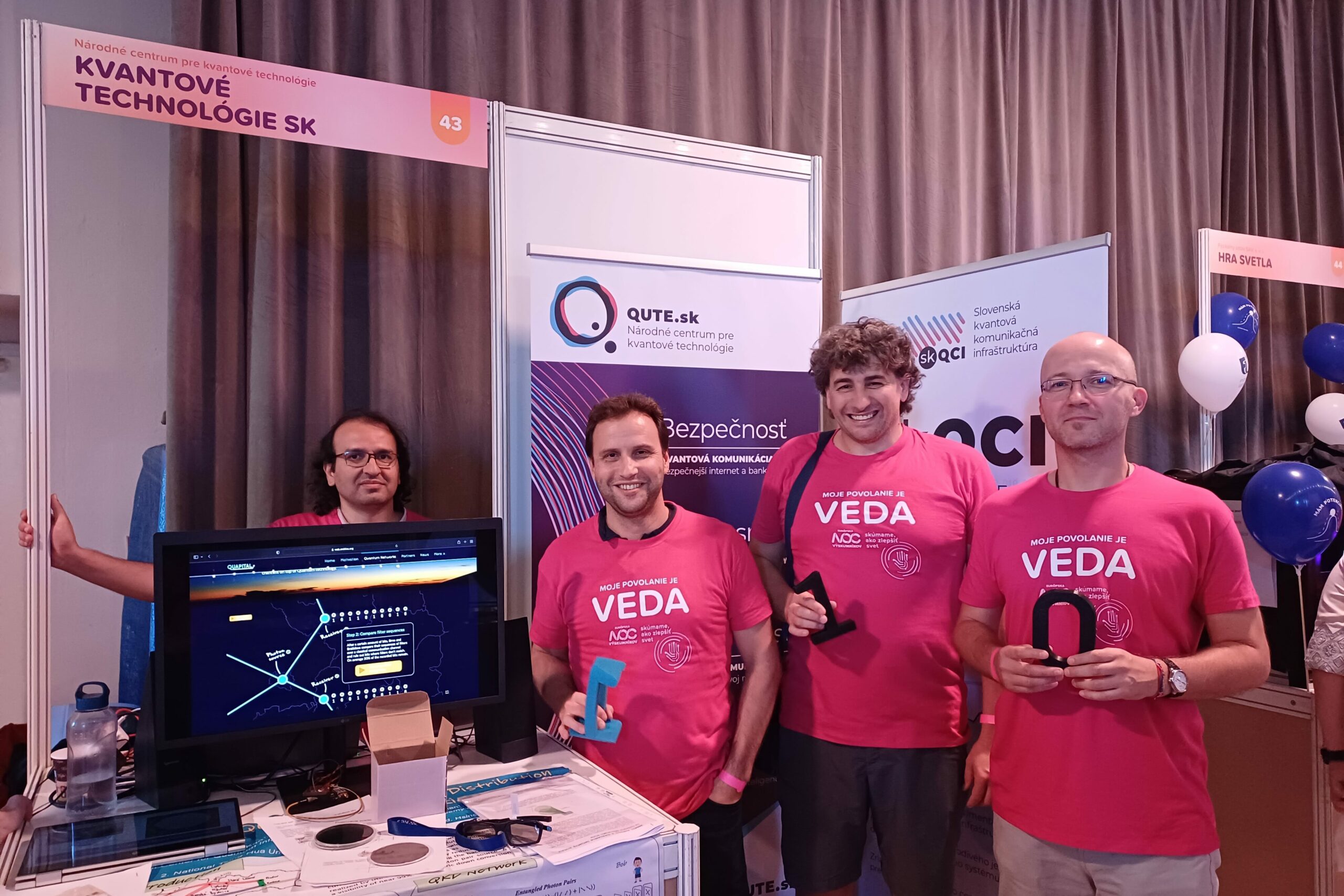
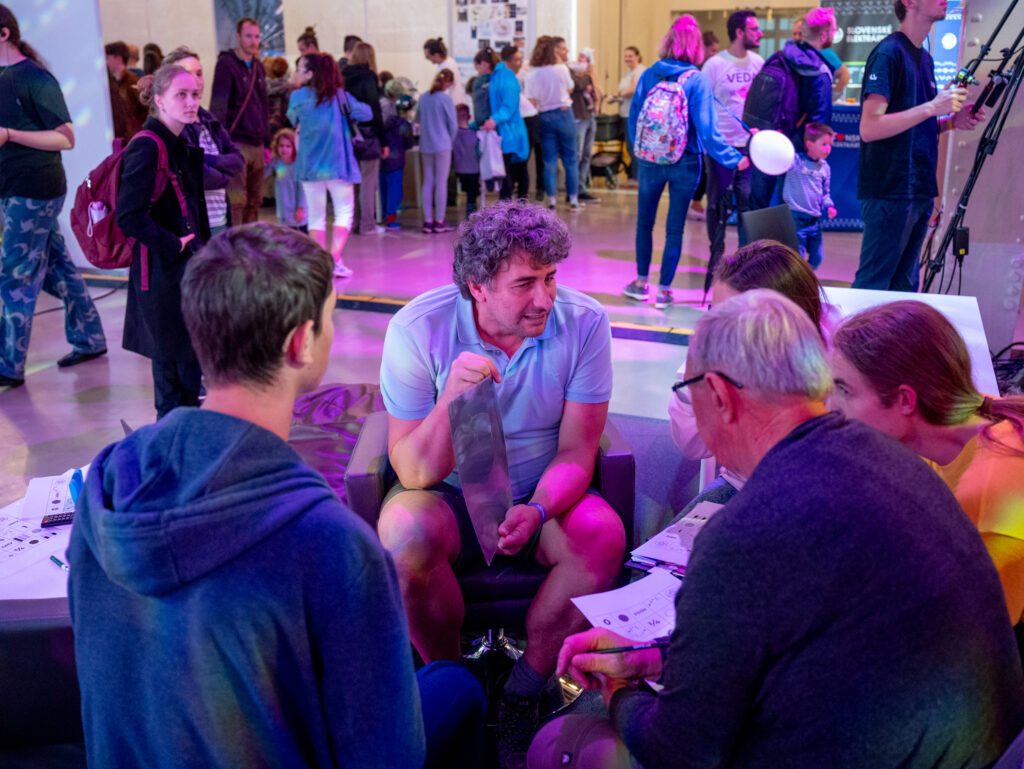
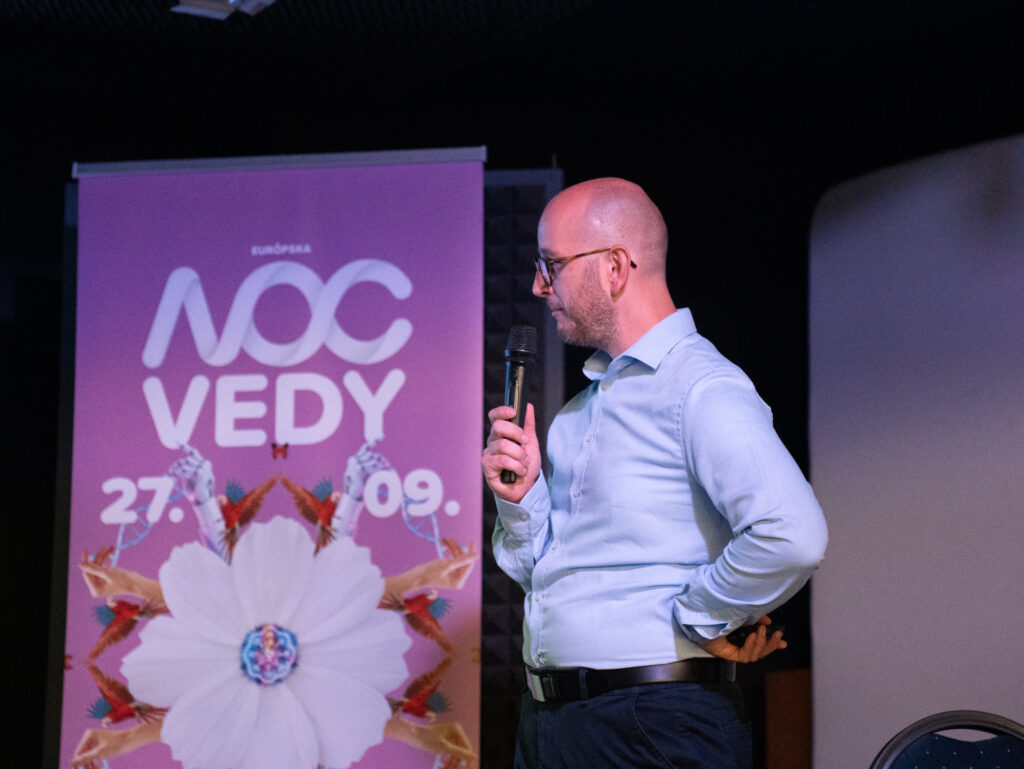
The pandemic did not bring our public engagement activities to a halt. In 2020, Mário Ziman gave a lecture entitled The Quantum Era as part of the event’s online studio programme. When in-person events returned, we took part again in 2023 with the QUTE.sk exhibition stand Quantum Technologies SK and the RCQI stand The Game of Light. In 2024, QUTE.sk expanded its programme beyond the exhibition stand to include workshops and lectures, laying the groundwork for an even larger presentation of quantum science.

Where science meets art
Science communication, however, extended beyond the exhibition stands. In 2024, it also entered the artistic sphere through the exhibition Mirroring – Contemporary Environmental Dilemmas: Art × Science × Design at the Slovak Design Center. As a satellite event of European Researchers’ Night, the exhibition showcased projects at the intersection of art, science and design, offering another way to explore scientific topics through creative experimentation.

Diana Cencer Garafová also contributed to the exhibition with Contaminated Echoes, a collaborative work created with artist Kelsey S. Brewer. Her involvement built on her participation in the exhibition stand at European Researchers’ Night in 2018, demonstrating how the interplay between science and creativity can extend beyond the traditional format of a science outreach event.
2025: The Quantum Zone celebrating IYQ
The year 2025 was a landmark year for the global quantum community. UNESCO proclaimed it the International Year of Quantum Science and Technology (IYQ), marking the centenary of the development of quantum mechanics and highlighting its fundamental importance to modern science and technology.
Quantum physics has already paved the way for technologies that we now take for granted. Building on these foundations, contemporary research has been advancing the development of new quantum computers, communication systems and highly precise measurement devices. The International Year was therefore not only a celebration of scientific achievements, but also an opportunity to show the public what possibilities quantum science could unlock in the future.
To mark this occasion, we created the Quantum Zone at European Researchers’ Night 2025, together with our partners at V-klub in Bratislava. The programme brought together QUTE.sk, the Institute of Physics of the Slovak Academy of Sciences, the Institute of Electrical Engineering of the Slovak Academy of Sciences, the Faculty of Mathematics, Physics and Informatics at Comenius University, Aricoma and the Kvantum Ideí podcast.
Visitors could explore the phenomena of light interference and polarisation, try out the principles of quantum encryption, investigate superconductivity and get an up-close look at a quantum computer. Alongside eight science exhibition stands and several lectures, the programme featured interactive workshops, visualisations and discussions about the future of quantum technologies.
The Quantum Zone demonstrated the many ways quantum science can be brought to life, from simple optical experiments to state-of-the-art computing devices. It also highlighted the importance of collaboration between research institutions, universities and technology partners. Their joint efforts made it possible to create a programme that connected fundamental research with practical demonstrations and hands-on learning.
2026: Quantum Technologies with new partners
At the 20th anniversary edition of European Researchers’ Night in Slovakia, we continued this tradition with a new series of interactive demonstrations. This year, we focused on photonic qubits – quantum information carriers based on the properties of light – and their potential applications in quantum technologies.
Researchers from the Research Center for Quantum Information (RCQI) at the Institute of Physics of the Slovak Academy of Sciences introduced visitors to photonics and quantum communication through experiments involving light polarisation, lasers and interference. They also demonstrated the principles underlying the processing of quantum information using photons.
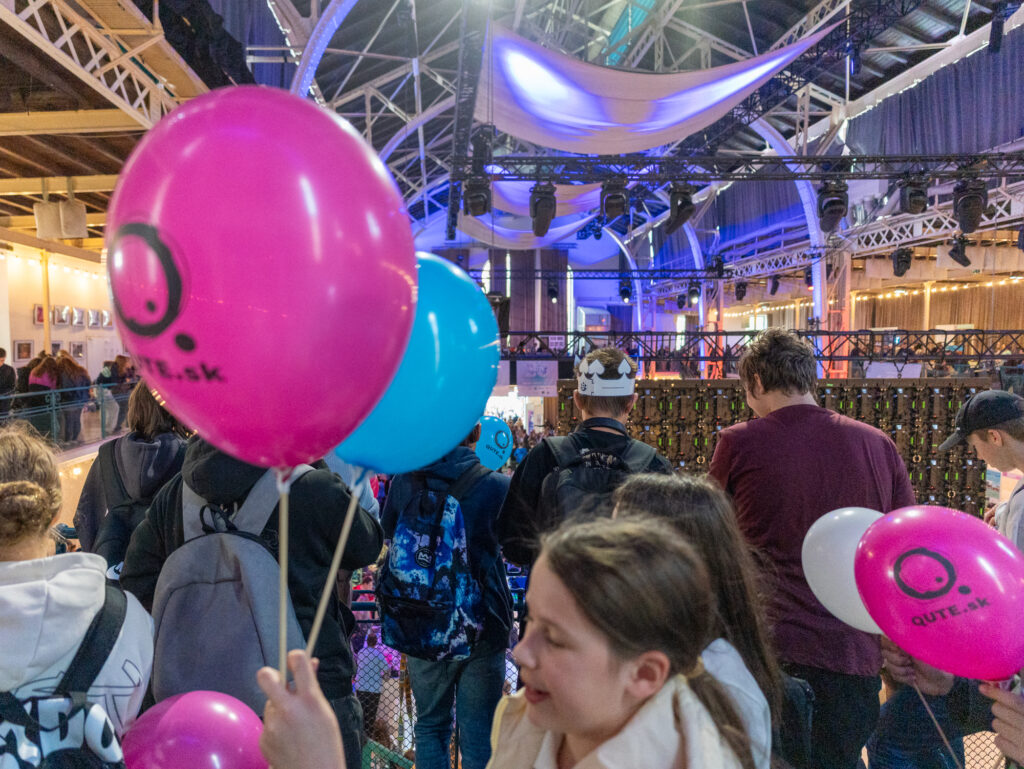
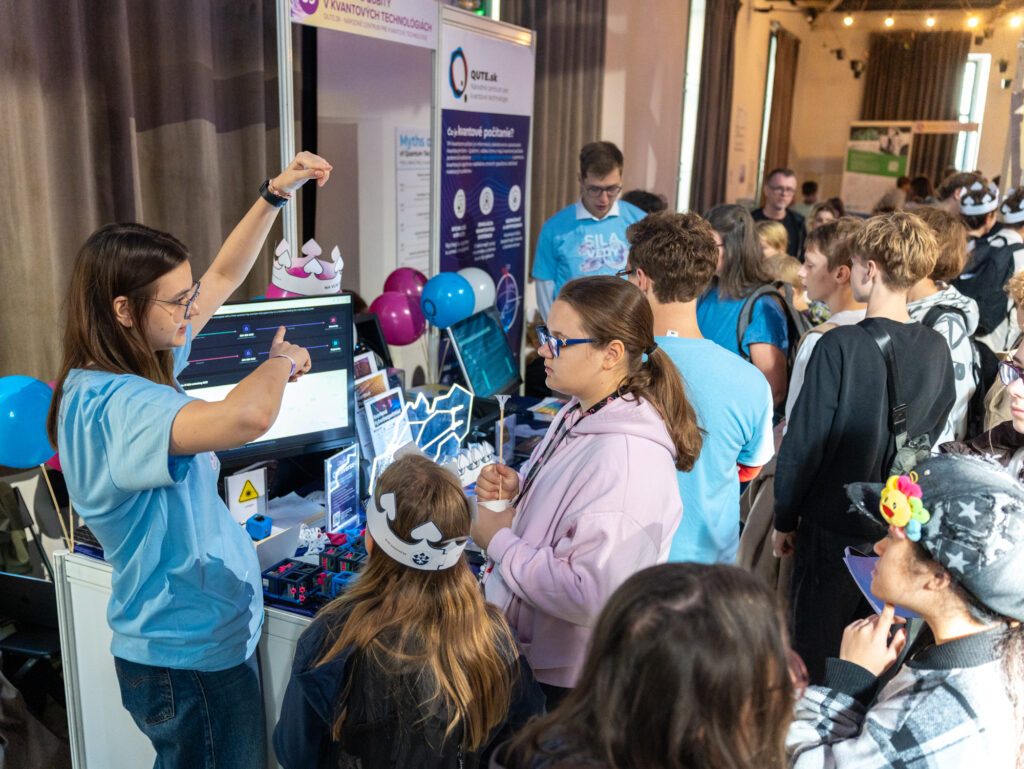
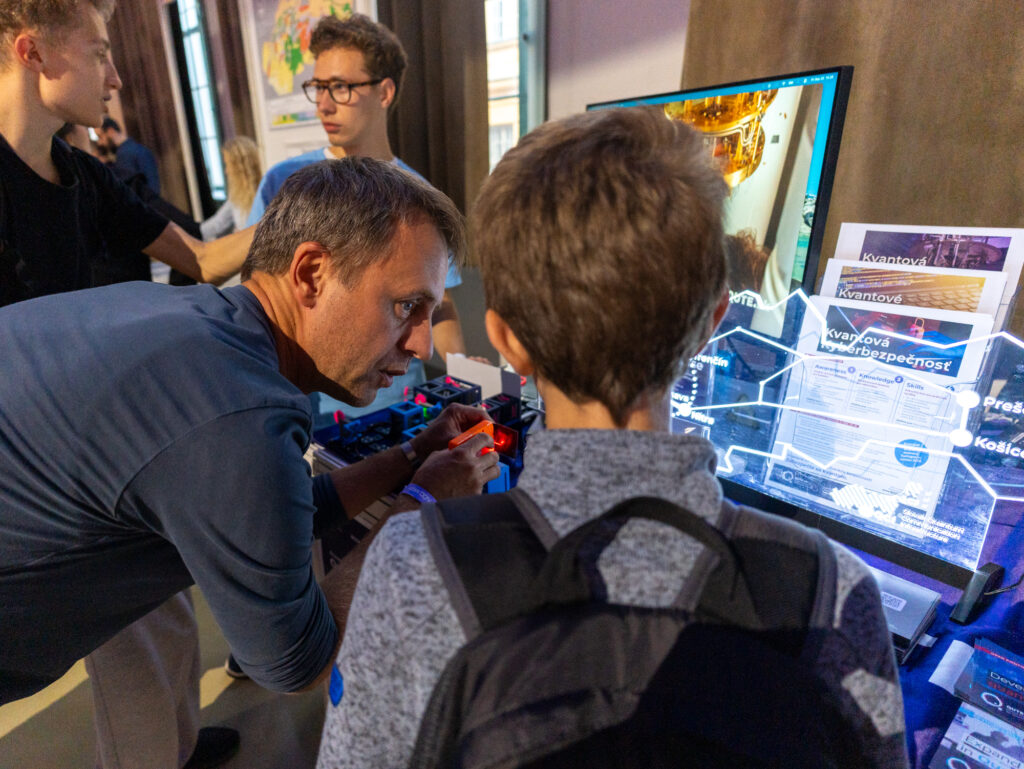
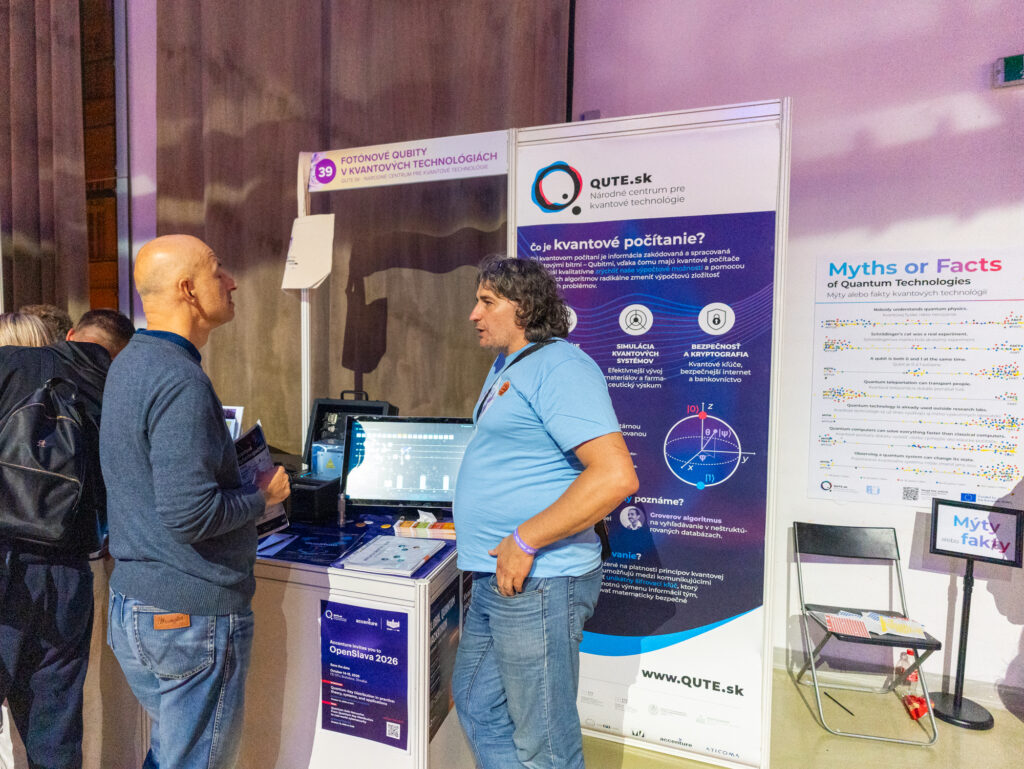
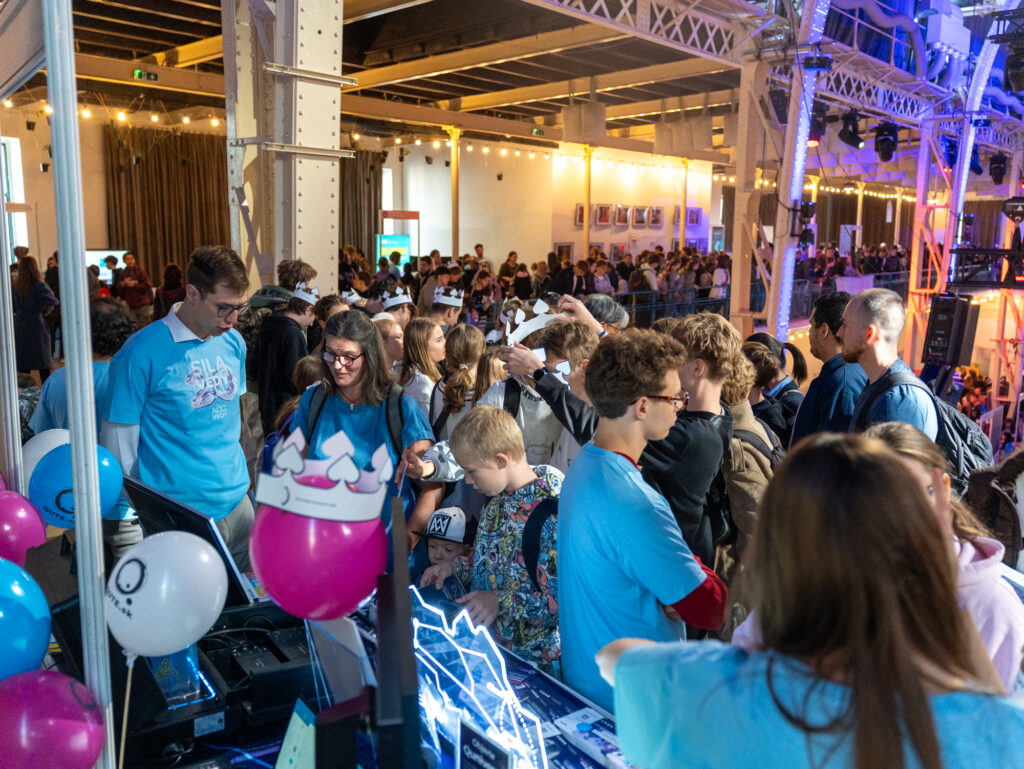
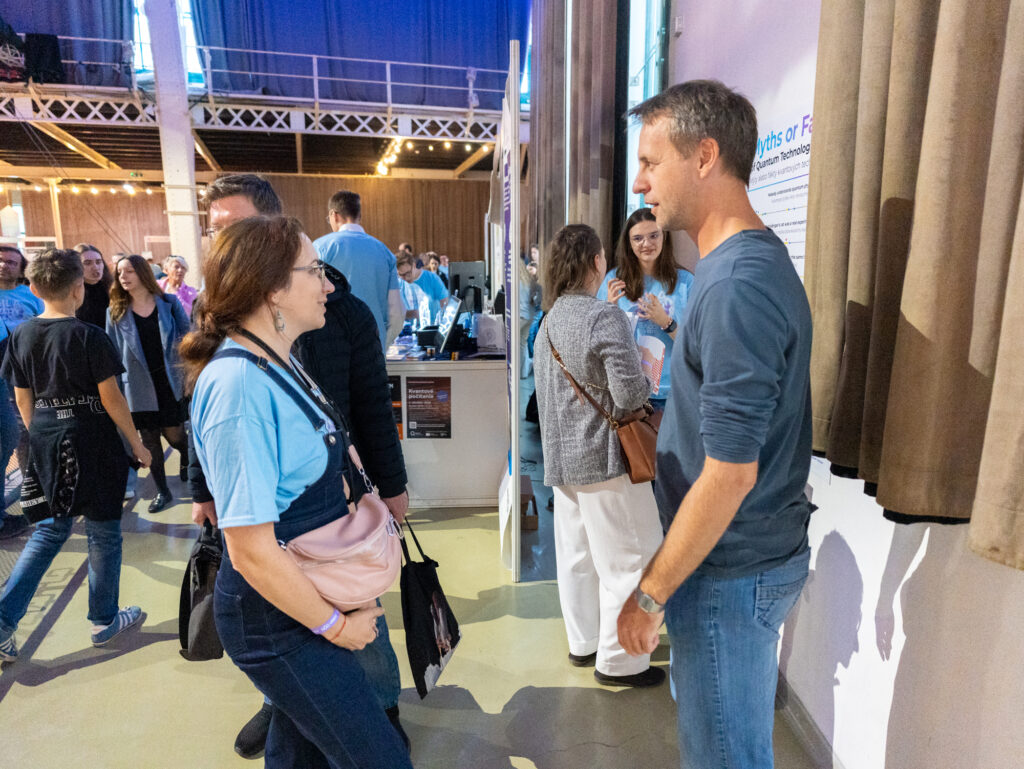
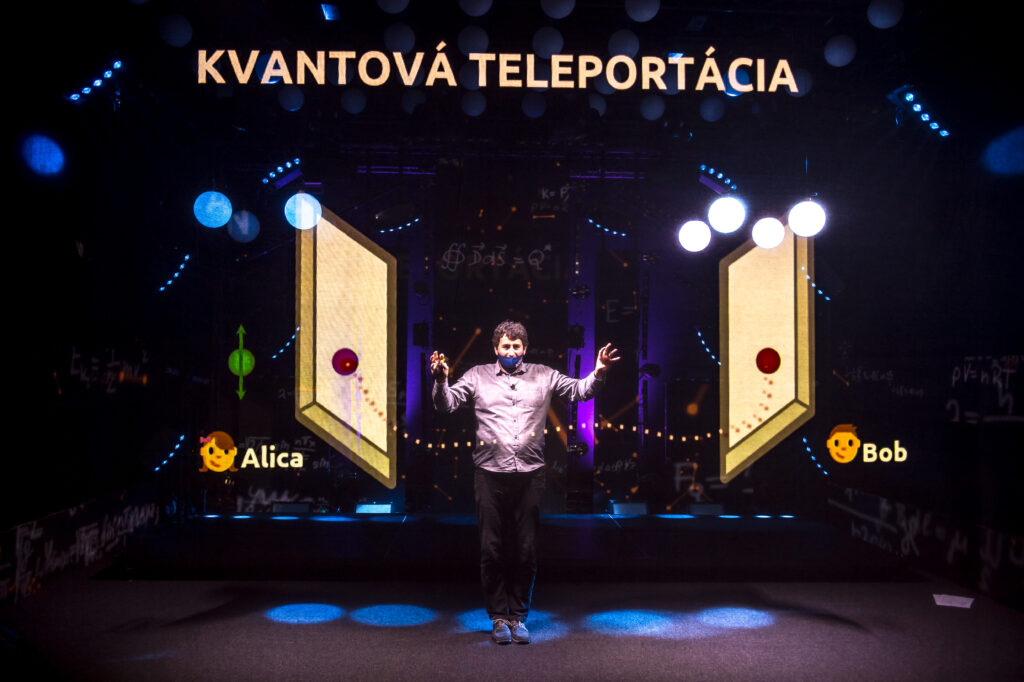
Our new partnership with the Faculty of Management Science and Informatics at the University of Žilina (FRI UNIZA) was another highlight of this year’s event. The faculty’s representatives brought a three-qubit “quantum computer” that gave visitors an opportunity to explore a device designed to process quantum information and see how quantum teleportation can be demonstrated using three qubits. This collaboration broadened our presentation of quantum technologies and highlighted the value of combining expertise in physics, computer science and engineering.
From our first exhibition stands and lectures in 2017, through the D3$ifru7 cipher challenge, to the Quantum Zone in 2025 and new partnerships in 2026, the formats of our participation have evolved, but our goal has remained the same: to bring quantum science closer to people who might not otherwise encounter it. The anniversary edition of European Researchers’ Night provided another opportunity to show that the quantum world belongs not only in scientific papers and laboratories. Through experiments, questions and face-to-face conversations, quantum science becomes more accessible to curious visitors of all ages.
Overview of Activities During the 20-Year History of European Researchers’ Night in Slovakia
2017 – Doba kvantová (The Quantum Era): An exhibition stand by the Research Centre for Quantum Information (RCQI) at the Institute of Physics of the Slovak Academy of Sciences (SAS), exploring quantum technologies and their future potential.
2017 – Kvantový svet (The Quantum World): A lecture by Mário Ziman, accompanied by a demonstration of a kinetic light installation. Watch the recording.
2017 – Svet ako výpočet (The World as Computation): A lecture by Daniel Nagaj exploring the connections between computation and the world. Watch the recording.
2018 – KvantOvé teChnológie pre KAždého (Quantum Technologies for Everyone): An interactive exhibition stand by RCQI at the Institute of Physics of SAS, introducing quantum technologies to the wider public.
2018 – Kvantová informácia a jej možnosti využitia v praxi (Quantum Information and Its Practical Applications): A lecture by Daniel Reitzner, recipient of the 2017 Young Scientist Award.
2019 – D3$ifru7: A cipher challenge in which visitors could test their logical thinking and try to decipher coded messages. Winner: Ondrej Szekely; randomly selected successful solver: Lukáš Gáborík.
2020 – Doba kvantová (The Quantum Era): An online lecture by Mário Ziman on quantum physics and its potential.
2023 – Kvantové technológie SK (Quantum Technologies SK): A QUTE.sk exhibition stand dedicated to quantum technologies.
2023 – Hra svetla (The Game of Light): An RCQI exhibition stand featuring experiments and demonstrations of the properties of light.
2024 – Quantum Technologies and Complexity: A QUTE.sk exhibition stand presenting quantum physics and technologies through interactive demonstrations.
2024 – Complexity: The Complexity of Our Situation Amid the Climate Crisis – Perspectives from Four Scientific Disciplines: A lecture by Natália Móller (RCQI, Institute of Physics of SAS).
2024 – Výpočtová zložitosť a kvantový počítač (Computational Complexity and the Quantum Computer): A lecture by Daniel Reitzner (VTT Technical Research Centre of Finland Ltd).
2024 – Zahrajme sa s kvantovým počítačom (Let’s Play with a Quantum Computer): A workshop led by Daniel Buchta (QUTE.sk).
2024 – Intuitive Quantum Test: A workshop led by Mário Ziman (Institute of Physics of SAS).
2024 – Mirroring (Contemporary Environmental Dilemmas: Art × Science × Design): An accompanying exhibition at the Slovak Design Center exploring the intersection of art, science and design. It featured Contaminated Echoes, a collaborative work by Kelsey S. Brewer and Diana Cencer Garafová.
2024 – A lecture by Gabriela Kotúčová at a secondary school in Piešťany.
2025 – Kvantová zóna (Quantum Zone): A dedicated programme bringing together interactive demonstrations, workshops, lectures and discussions on quantum science and technology.
2025 – Laserové LEGOratórium (Laser LEGOratory): An RCQI exhibition stand where visitors could assemble a Michelson interferometer using lasers, mirrors and LEGO bricks.
2025 – Magica Polarica Fotonica: An RCQI exhibition stand featuring experiments with light polarisation and polarising filters.
2025 – Fotónová šifra (Photon Cipher): An RCQI exhibition stand demonstrating quantum encryption and the BB84 protocol.
2025 – Superconductivity and Superconducting Quantum Technologies: An FMFI UK exhibition stand demonstrating the properties of superconductors, including superconducting levitation.
2025 – Lapanie svetielok studeným drôtikom (Catching Little Lights with a Cold Wire): An exhibition stand by the Institute of Electrical Engineering of SAS.
2025 – Kvantový počítač zblízka (A Quantum Computer Up Close): An Aricoma exhibition stand presenting a desktop quantum computer with two qubits.
2025 – Geometria kvantovej fyziky (The Geometry of Quantum Physics): Interactive visualisations of quantum states and quantum entanglement.
2025 – Chaos vo fyzike (Chaos in Physics): An exhibition stand by the Institute of Physics of SAS.
2025 – Svetelné zaklínadlo: cos²θ (The Light Spell: cos²θ): A workshop led by Gabriela Kotúčová exploring the properties of light and polarisation.
2025 – Zahrajme sa s kvantovým počítačom (Let’s Play with a Quantum Computer): A workshop led by Daniel Buchta introducing the principles of quantum computing.
2025 – Paradoxy kvantového sveta – základy kvantových technológií (Paradoxes of the Quantum World – Fundamentals of Quantum Technologies): A lecture by Mário Ziman (QUTE.sk).
2025 – Správna odpoveď je otázka I (The Right Answer Is a Question I): A lecture by Vladimír Bužek (RCQI, Institute of Physics of SAS).
2025 – Shapes and Shades of the Quantum: A lecture by Konrad Szymański (RCQI, Institute of Physics of SAS).
2025 – Klasické vs. kvantové (Classical vs. Quantum): A discussion hosted by QUTE.sk.
2025 – Čo vieme o realite sto rokov po objave kvantovej teórie (What Do We Know About Reality One Hundred Years After the Discovery of Quantum Theory?): Vladimír Bužek featured on the Kvantum Ideí podcast.
2025 – optiQUTE: A science outreach initiative in the form of a science courier.
2025 – Q’Art: An art competition.
2025 – Hravé Kvantohranie (Quantum Play): An interactive quantum-themed competition.
2025 – Taming the Quantum World (Lars Becker-Larsen, 2013): An evening film screening.
2026 – A QUTE.sk exhibition stand developed in collaboration with its new partner, the Faculty of Management Science and Informatics at the University of Žilina (FRI UNIZA). The stand presented the skQCI project and a tabletop “quantum computer” demonstrating quantum teleportation.
