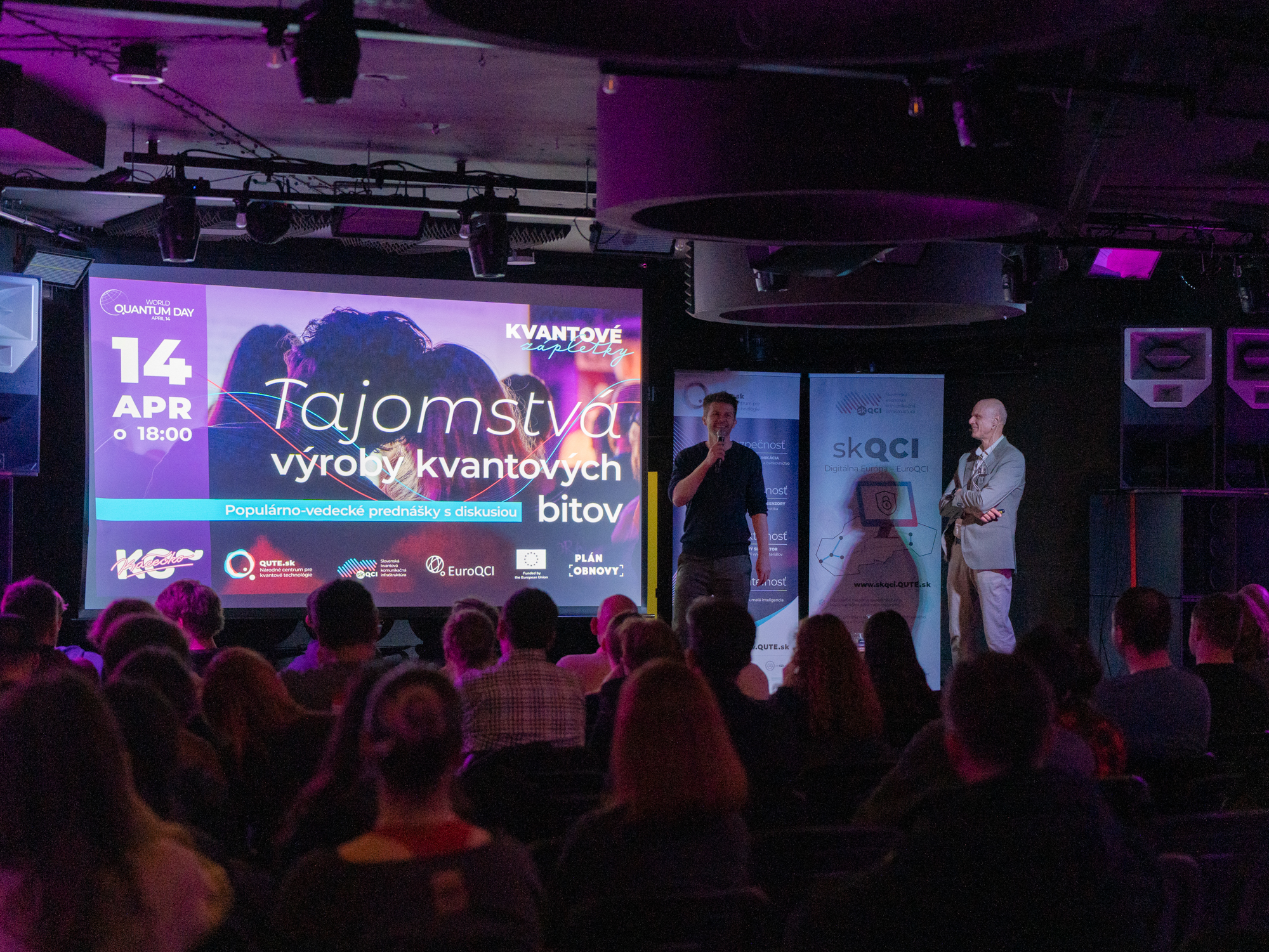
World Quantum Day in Bratislava: Slovak Scientists Presented the Physics of Qubits
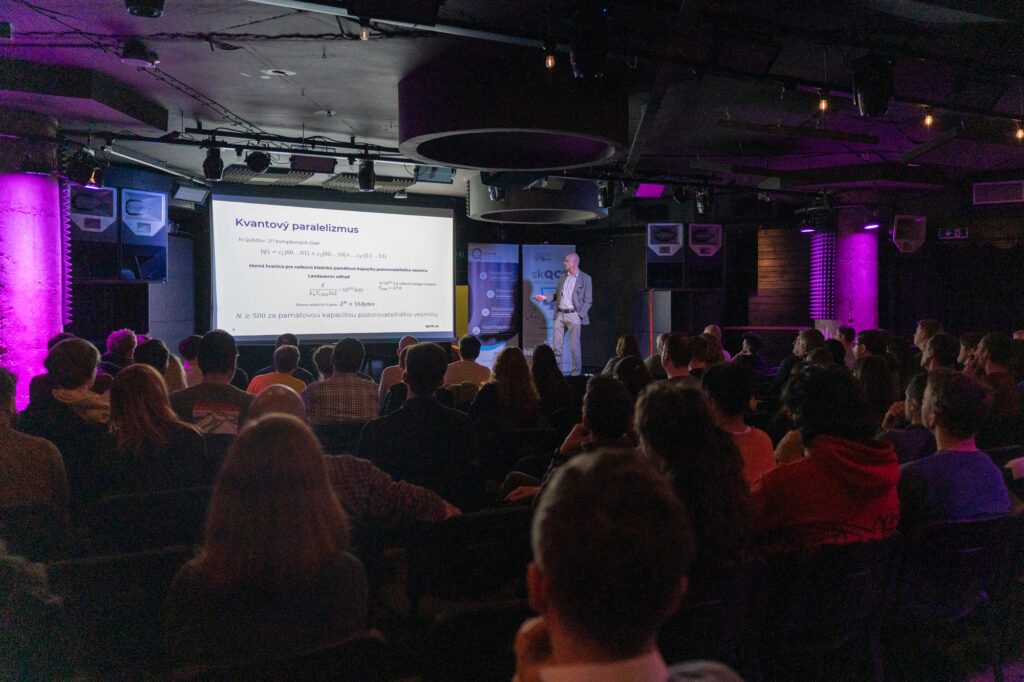
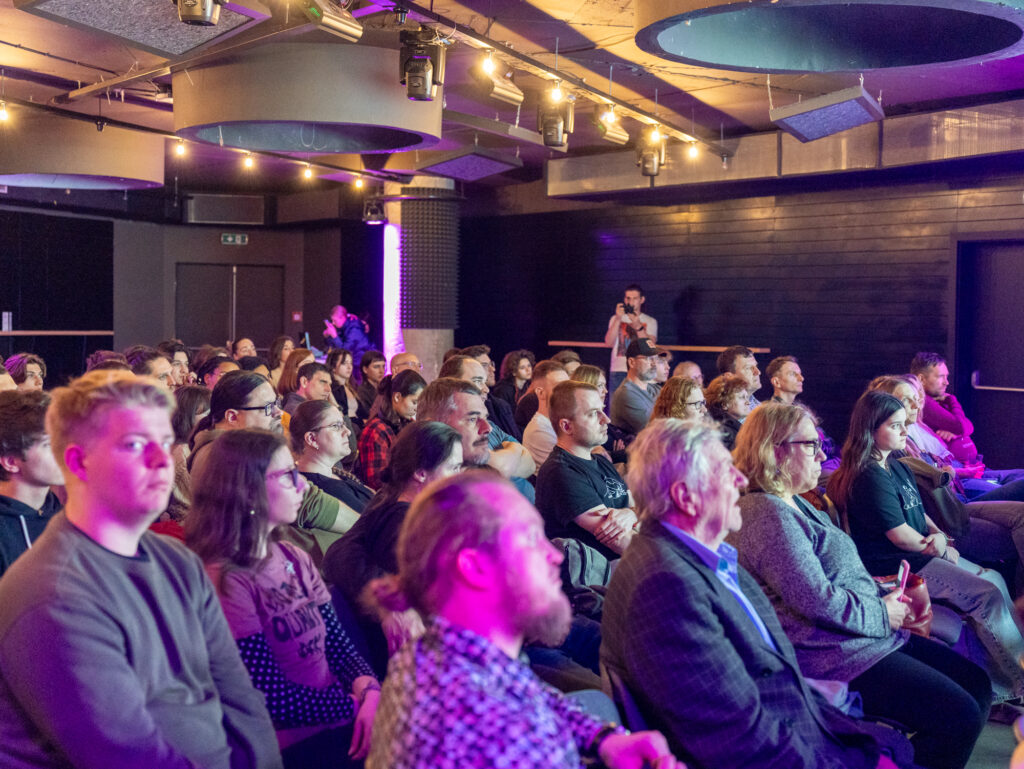
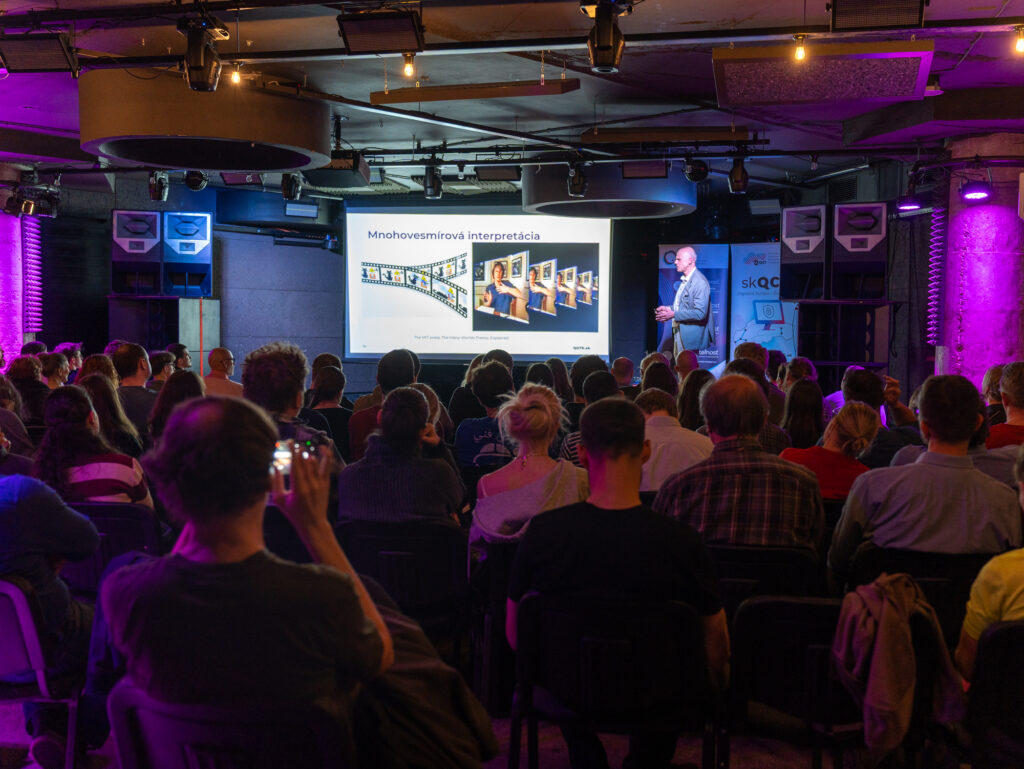
The event Quantum Entanglements 2026, held on April 14 at Kácečko in Bratislava on the occasion of World Quantum Day, once again offered the public an up-to-date perspective on developments in quantum technologies and quantum computing research.
This year’s edition focused on the physical realization of qubits – the fundamental building blocks of quantum computers. The program showcased three distinct approaches that are shaping current global research and technological development.
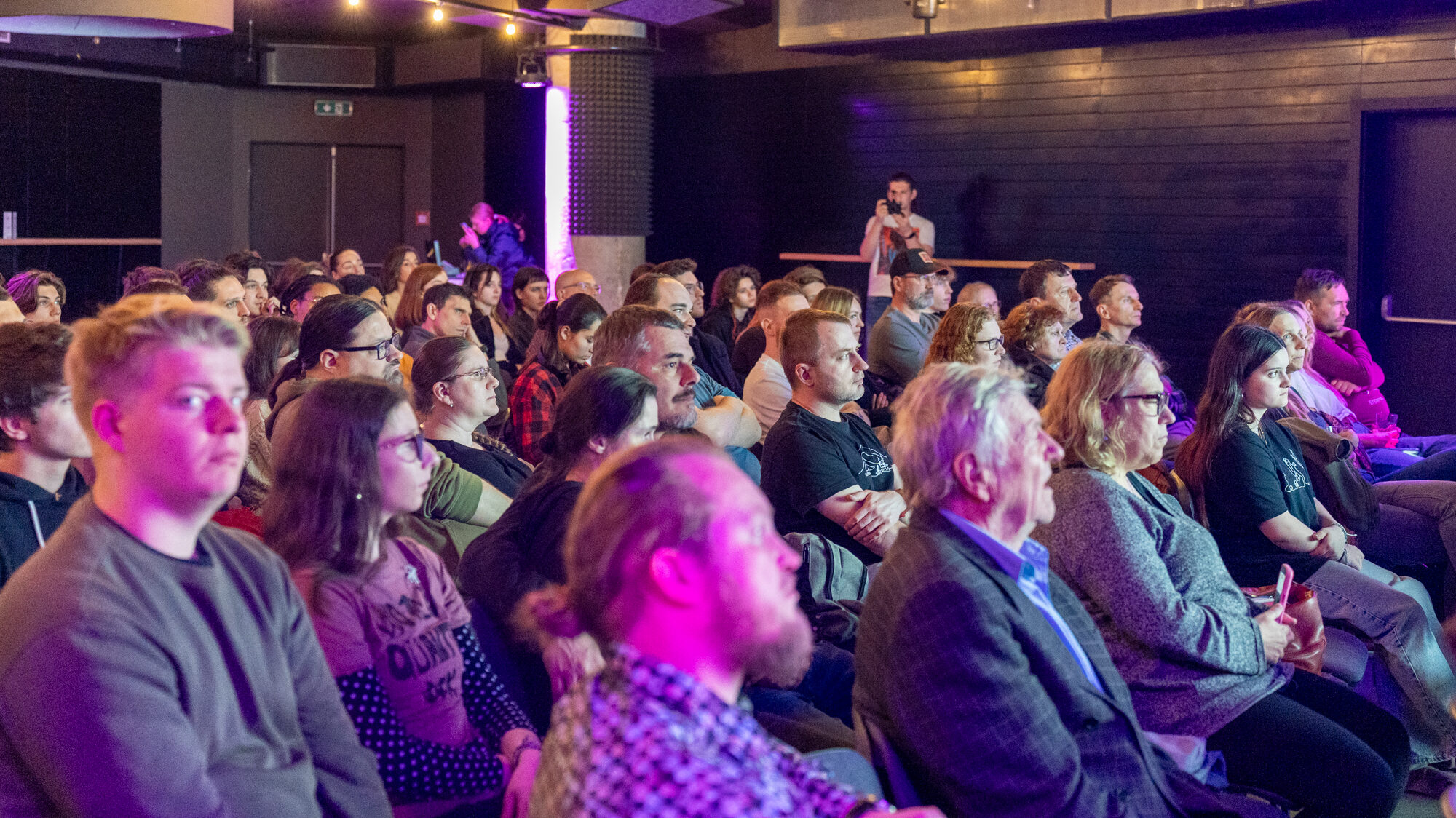
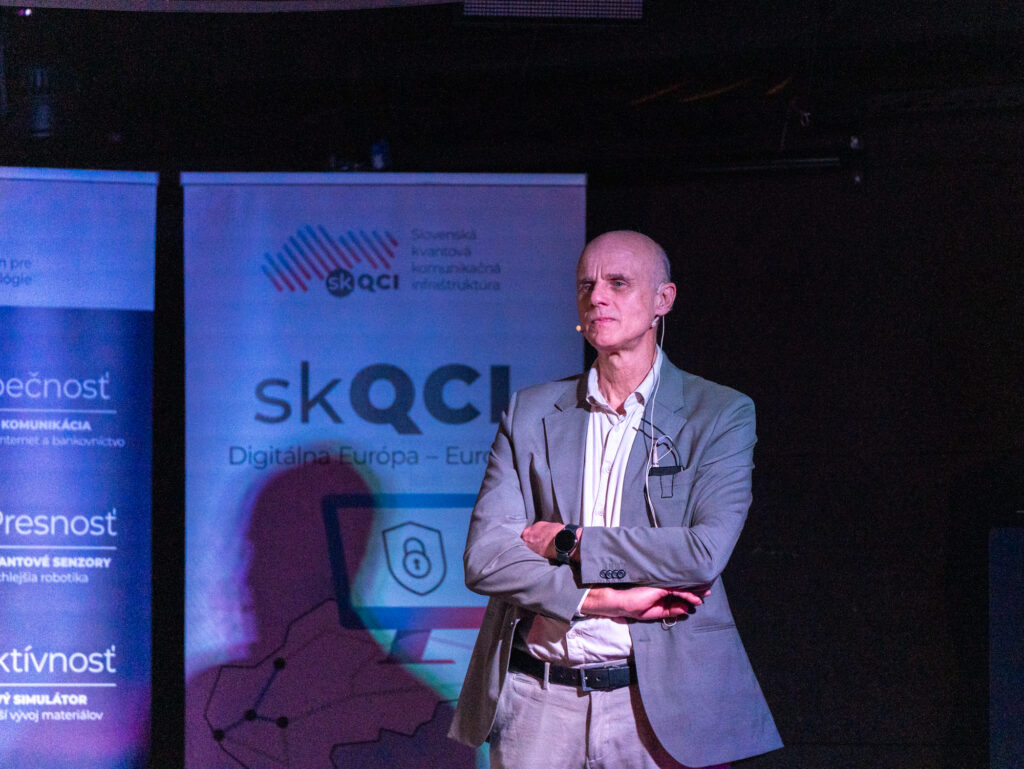
Miroslav Grajcar from the Faculty of Mathematics, Physics and Informatics at Comenius University in Bratislava presented research on superconducting qubits and quantum circuits. In his talk, he also addressed the significance of the 2025 Nobel Prize in Physics, which recognized advances in understanding and controlling quantum systems, placing these achievements in the broader context of current developments in quantum technologies. He also explained how superconducting systems operate at extremely low temperatures and highlighted the challenges related to their stability and scalability.
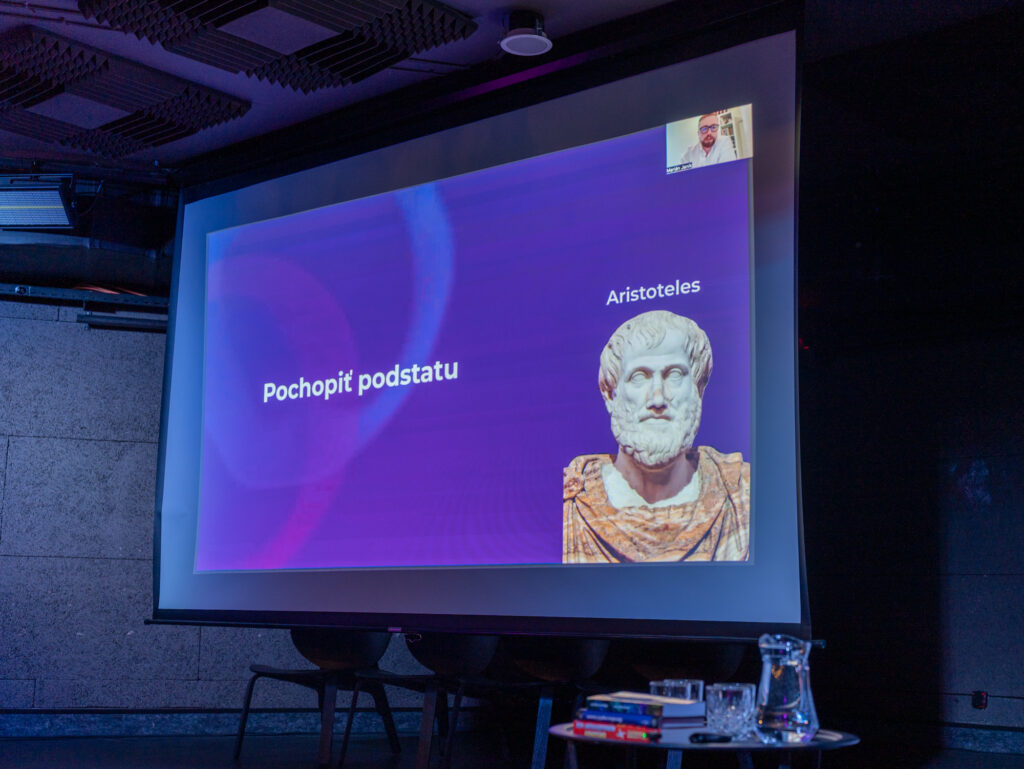
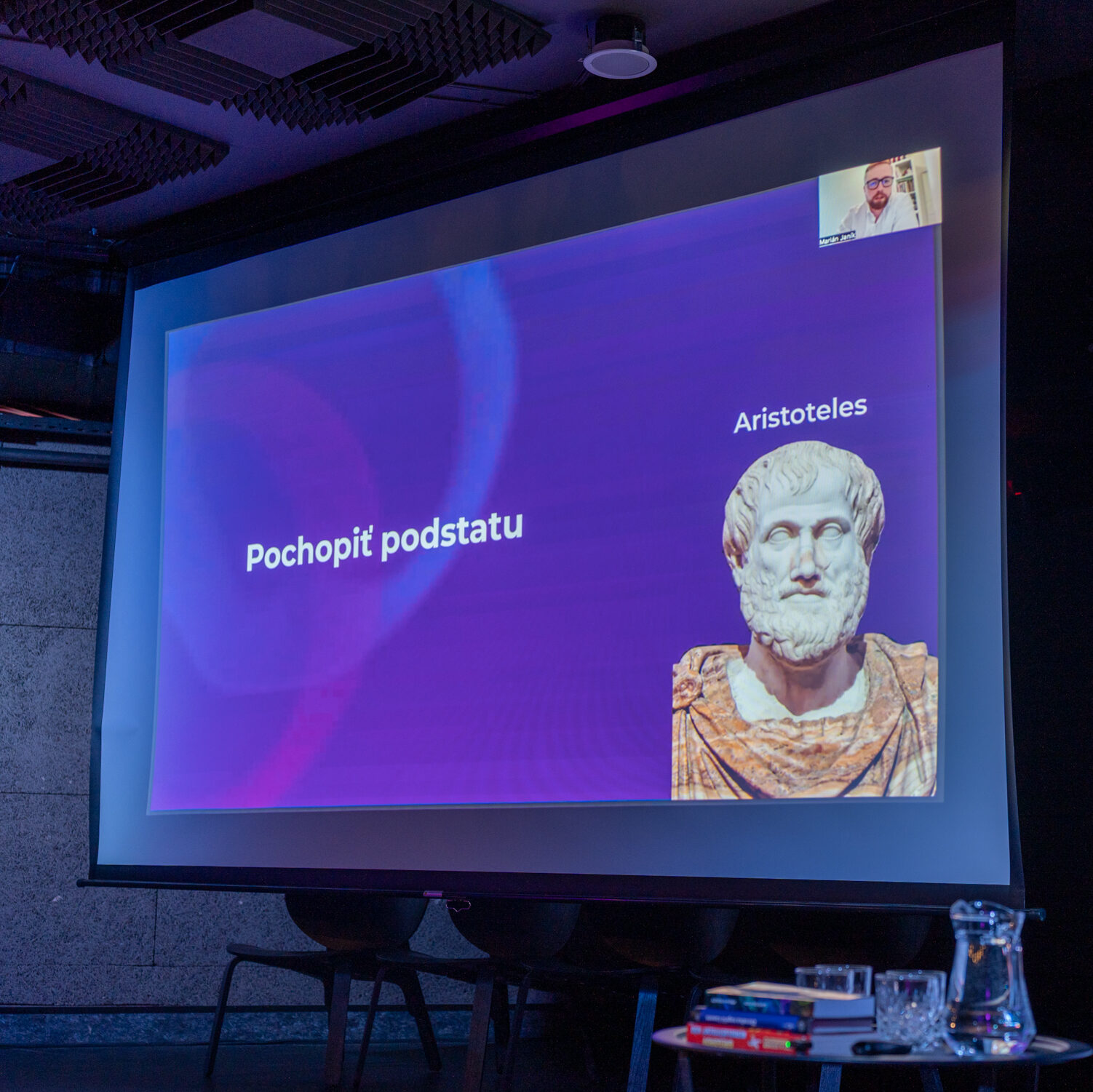
Marián Janík from the Institute of Electrical Engineering of the Slovak Academy of Sciences, who was unable to attend in person due to illness, presented his work through a pre-recorded talk focusing on semiconductor quantum structures – another promising pathway toward practical quantum technologies. He explained how semiconductor properties can be used to control quantum states and discussed the advantages of this approach in terms of integration and scalability.
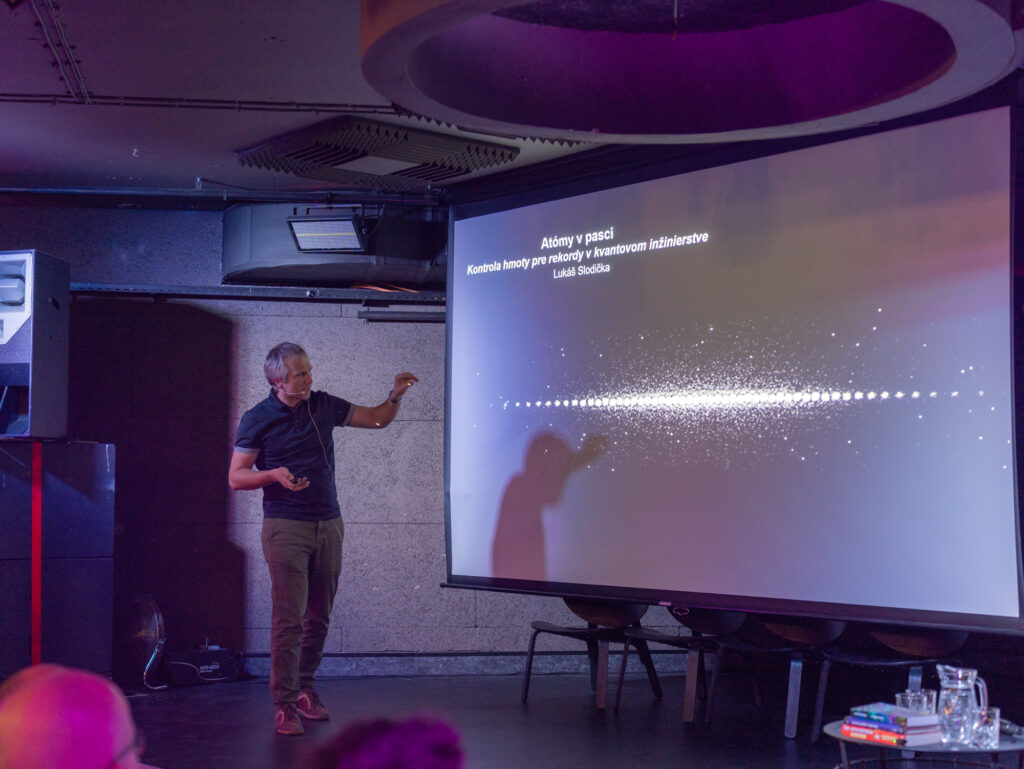
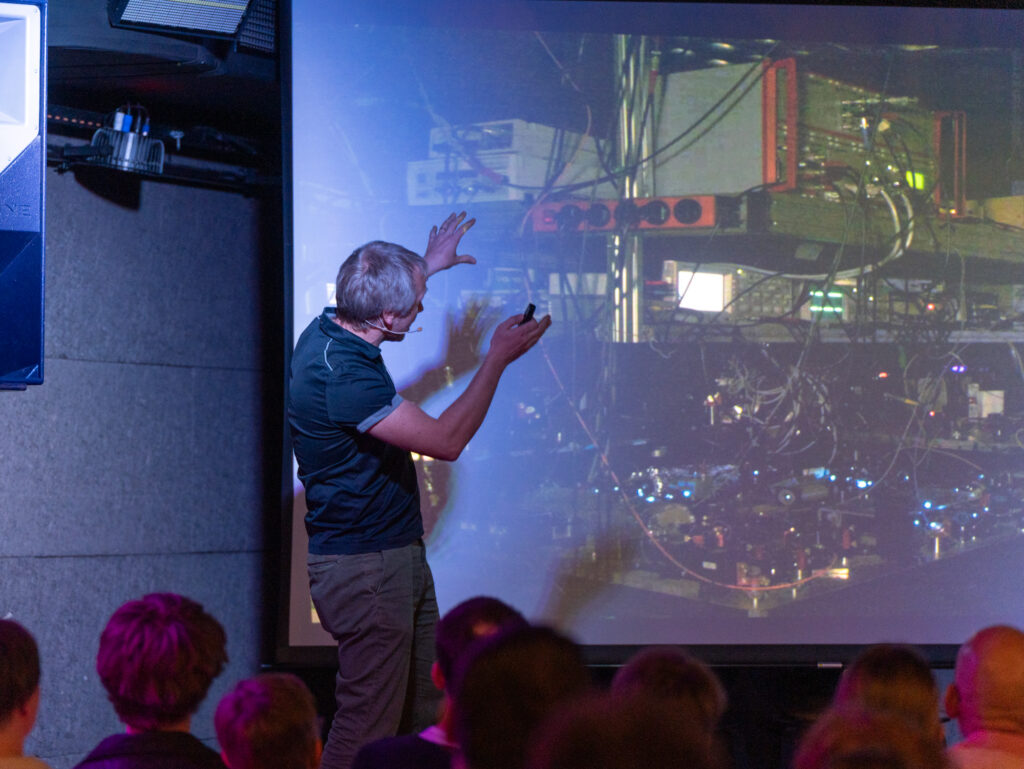
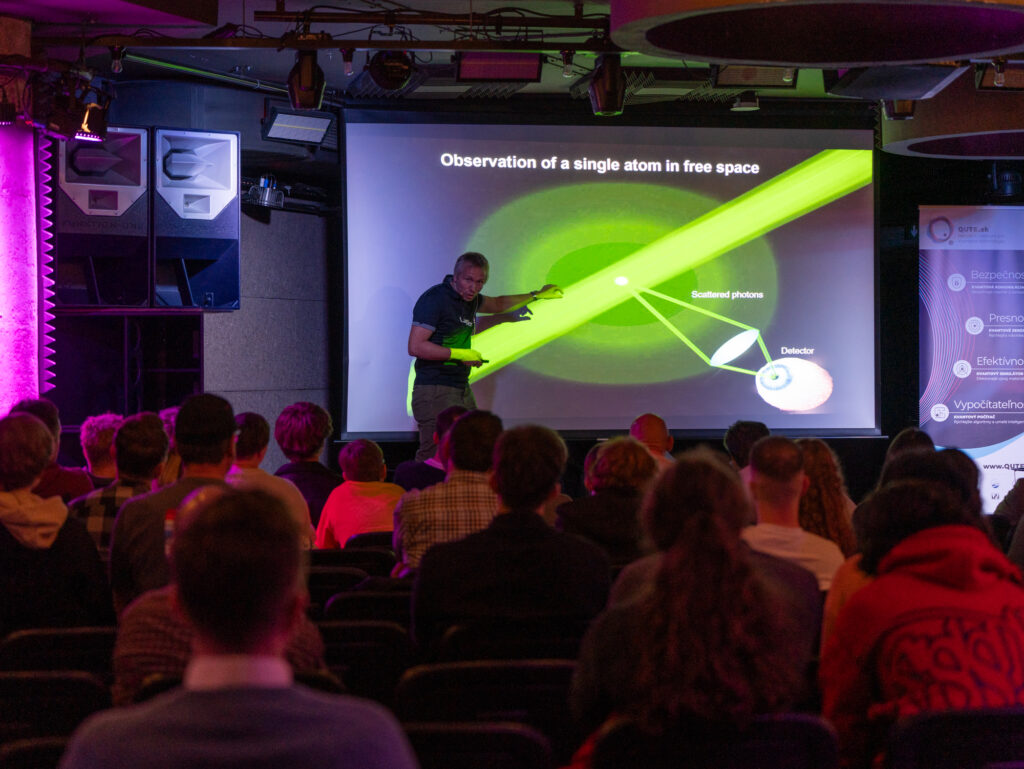
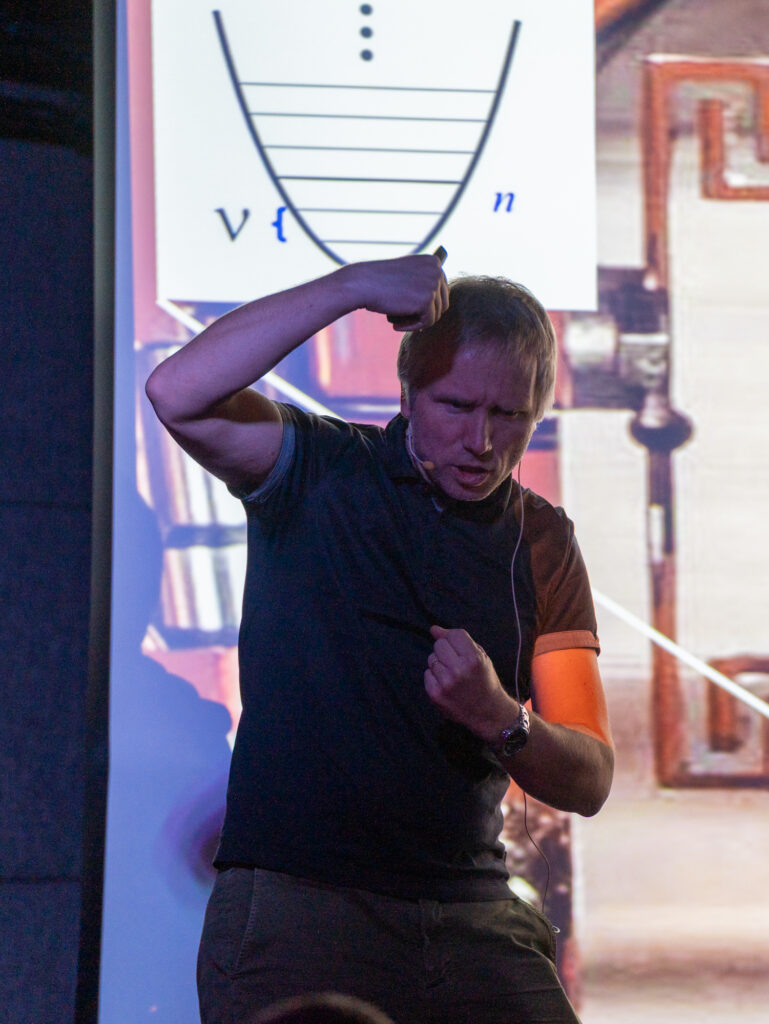
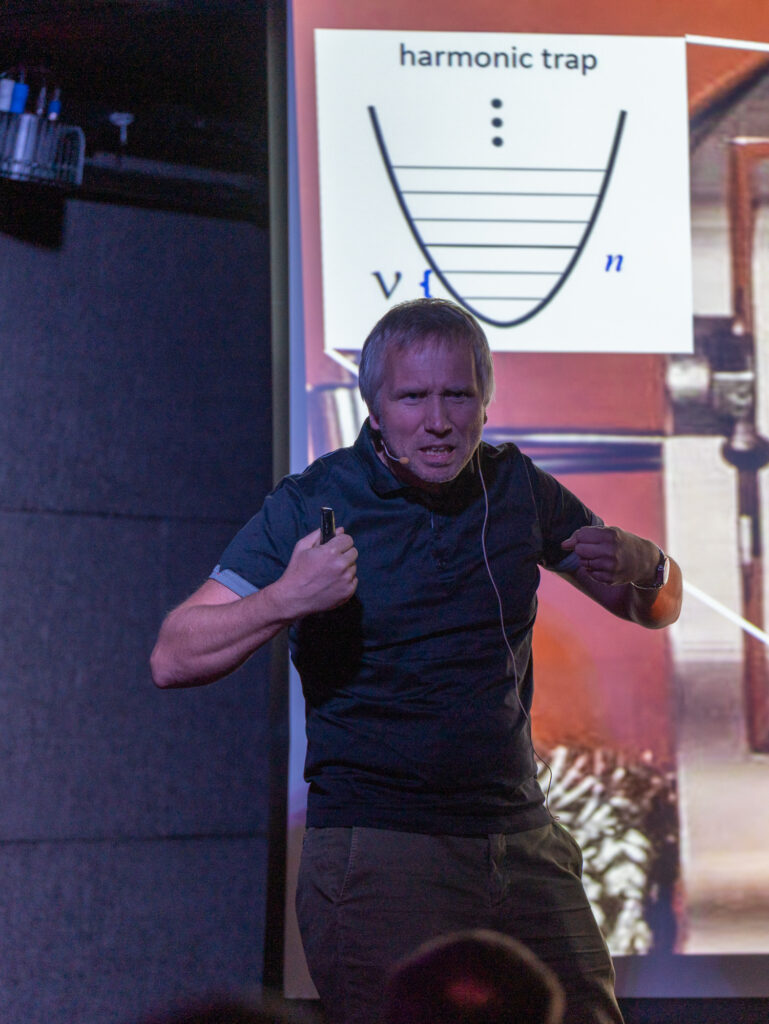
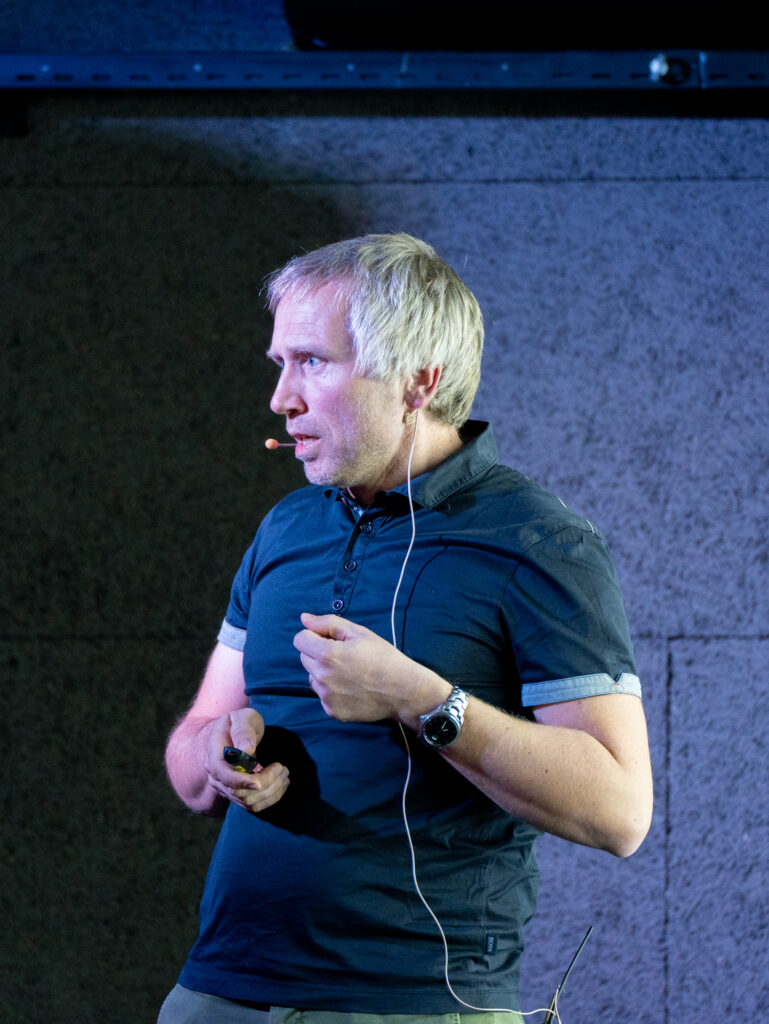
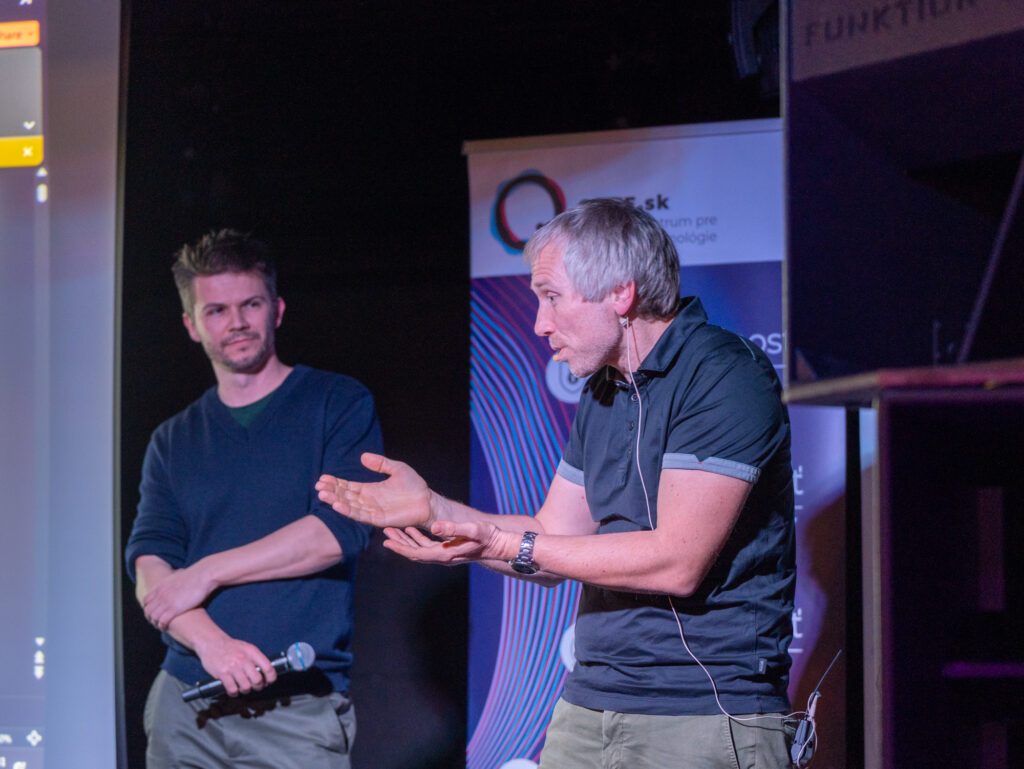
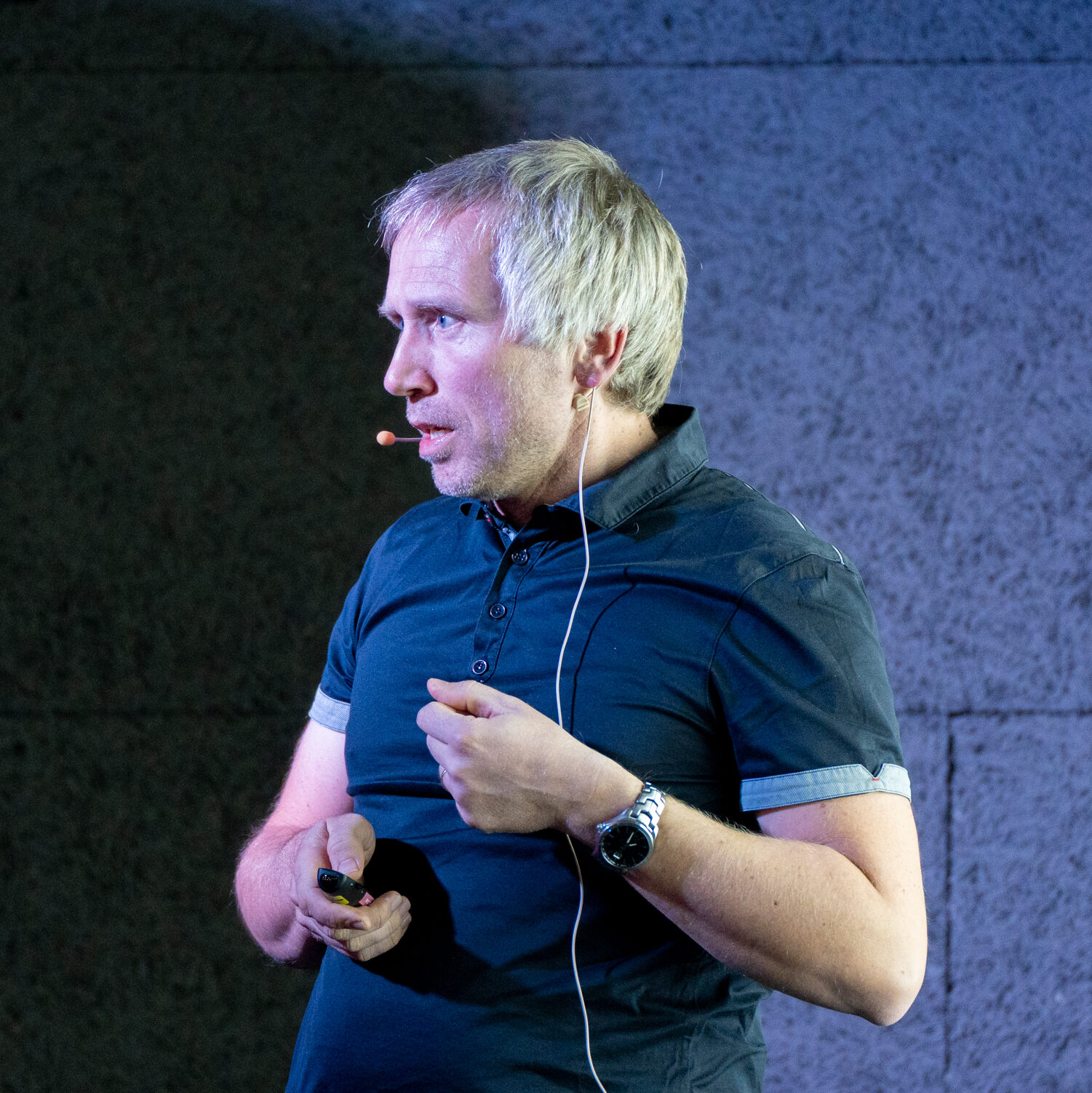
Lukáš Slodička from Quantum Optics Lab Olomouc (QOLO) at Palacký University in Olomouc introduced research in quantum optics, specifically the interaction between light and atoms. He demonstrated how individual quantum systems can be manipulated using light and outlined the role these approaches play in quantum communication and future technologies. His presentation stood out not only for its content but also for its engaging and energetic delivery.
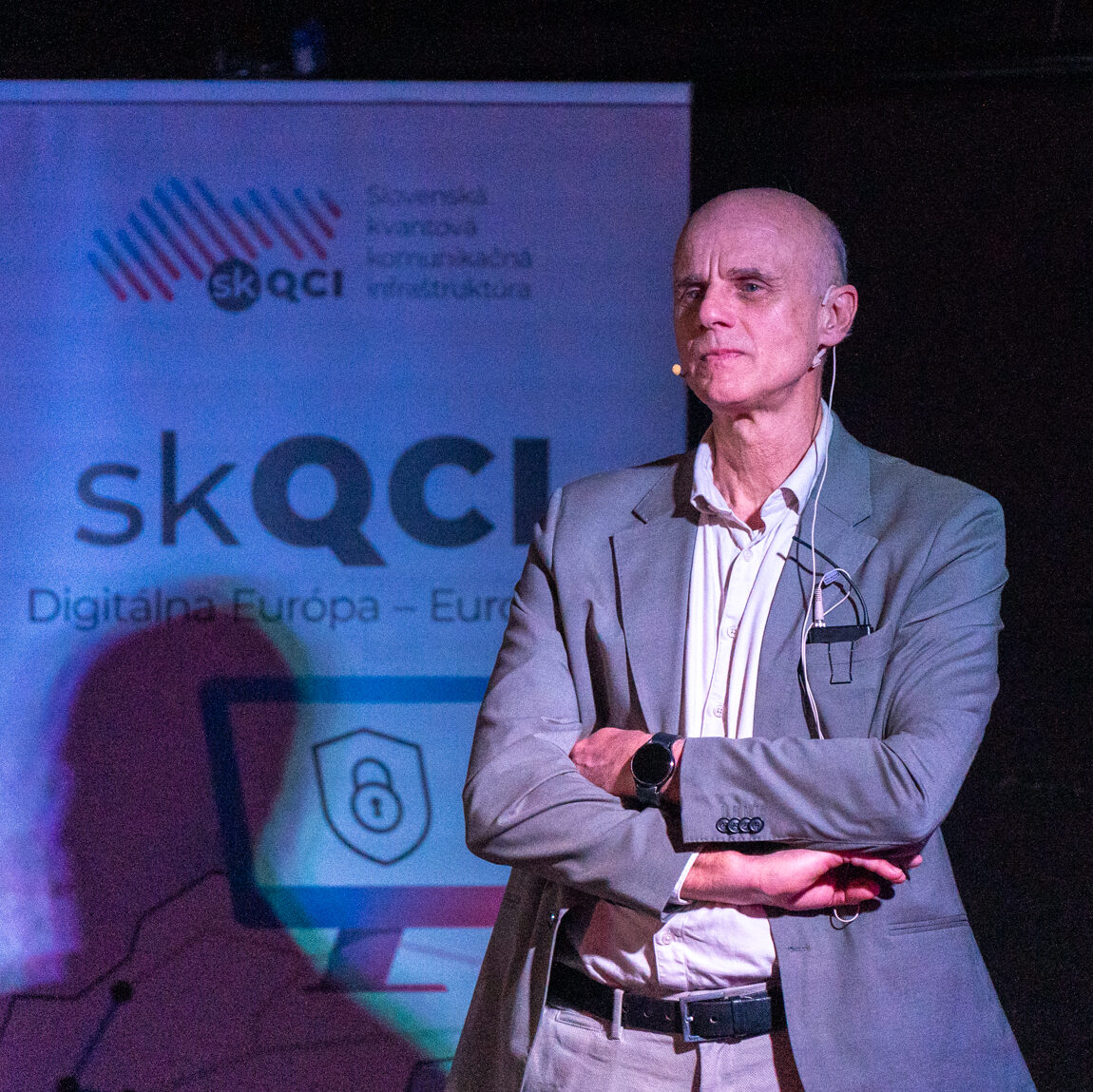
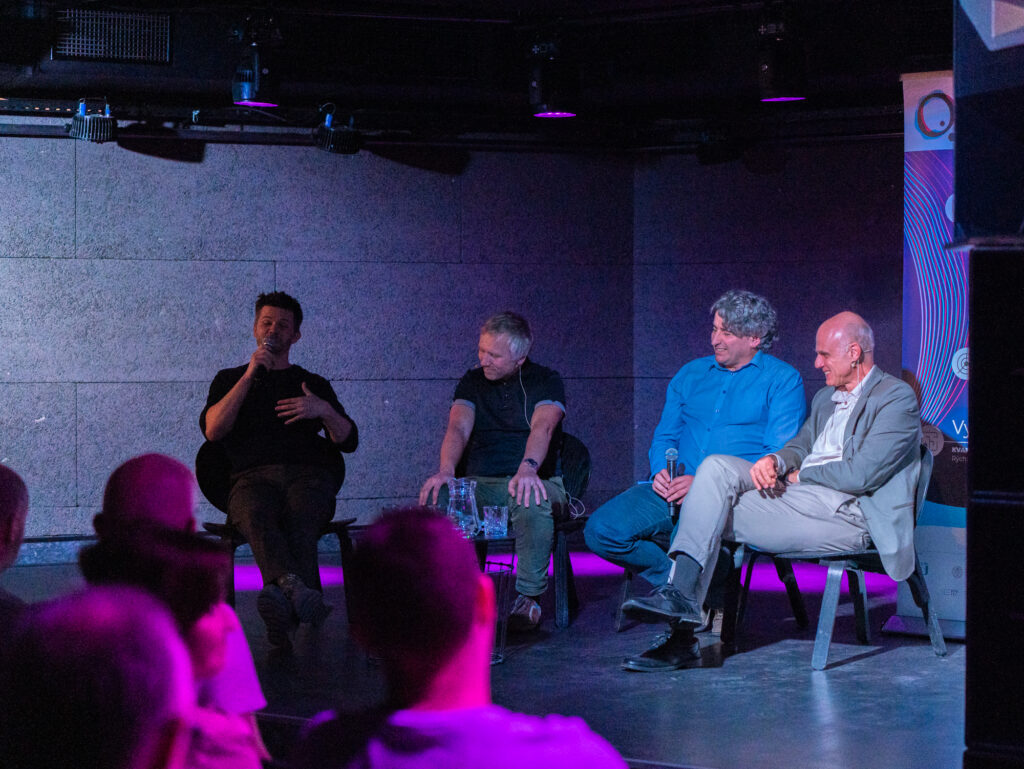
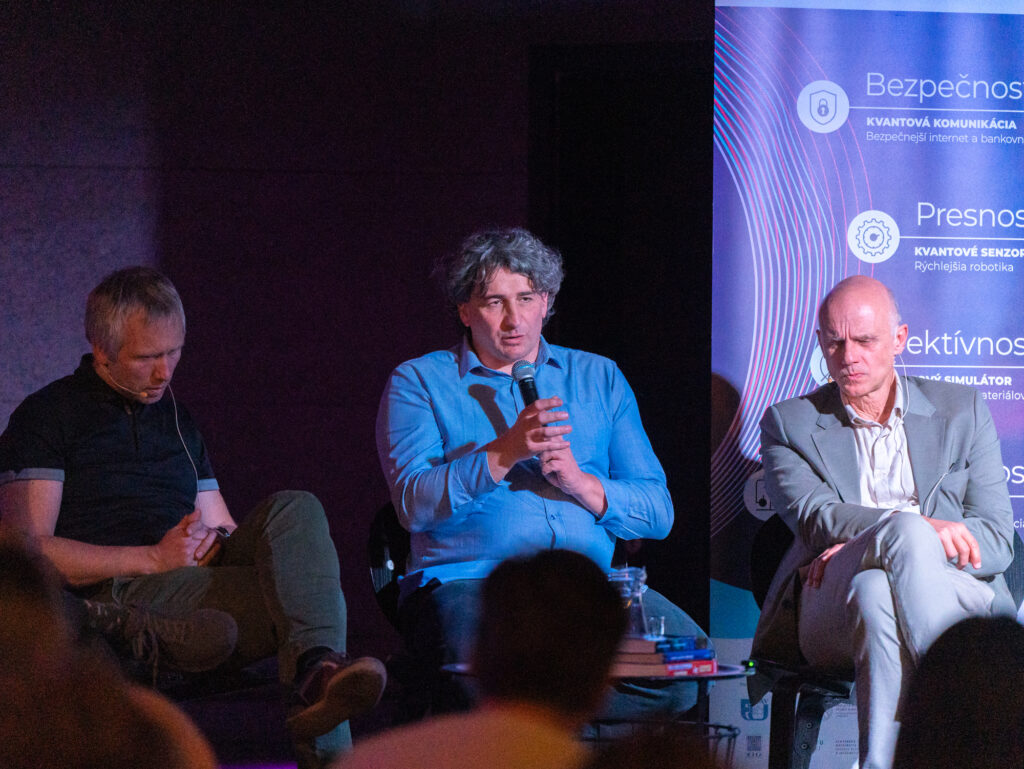
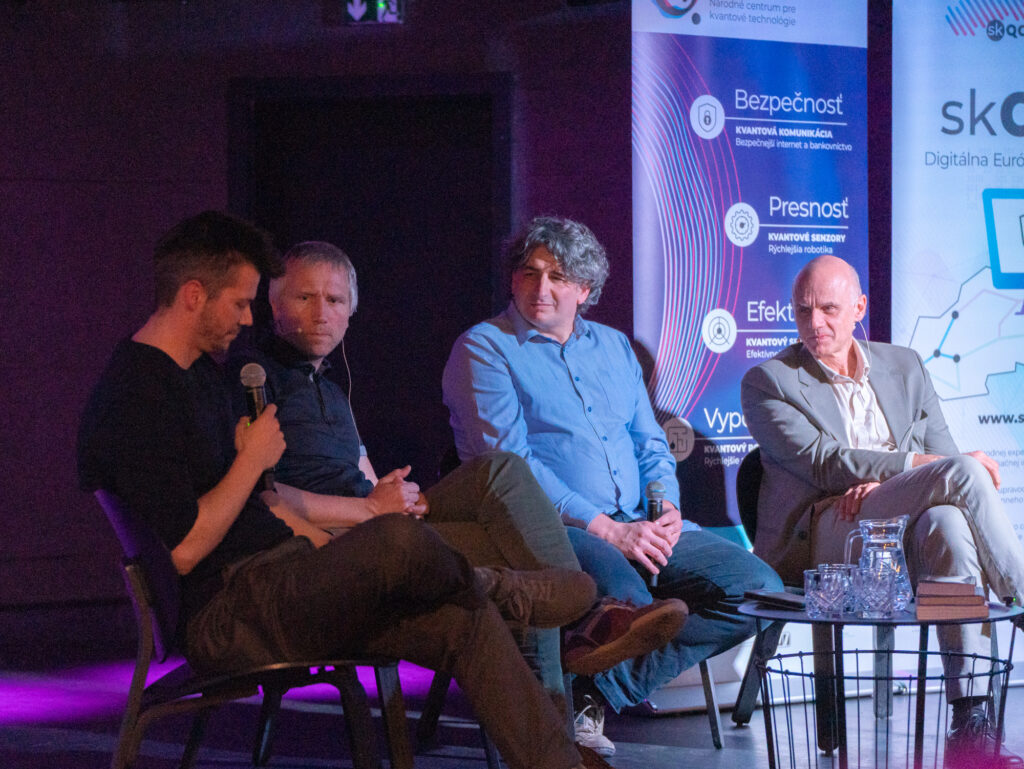
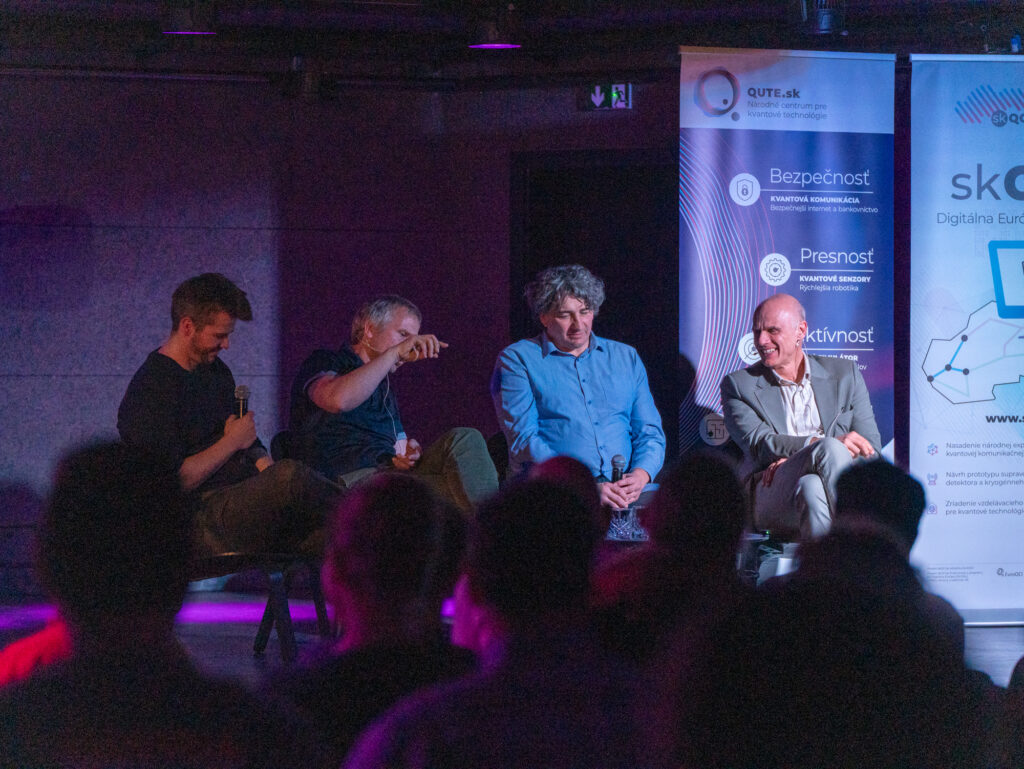
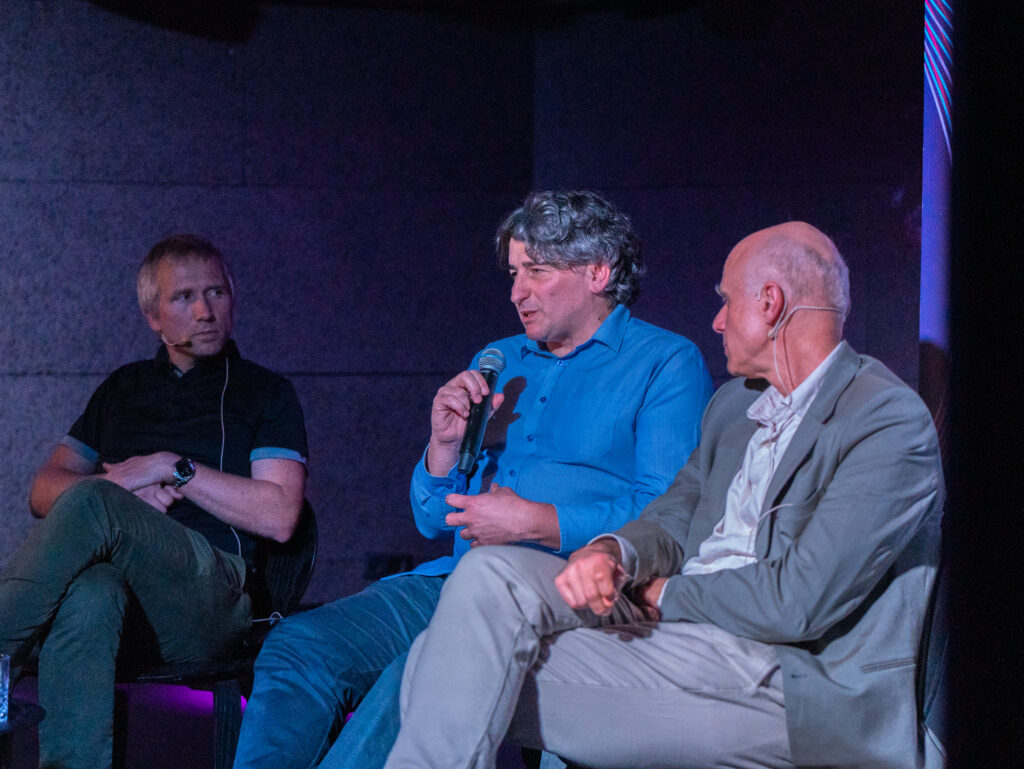
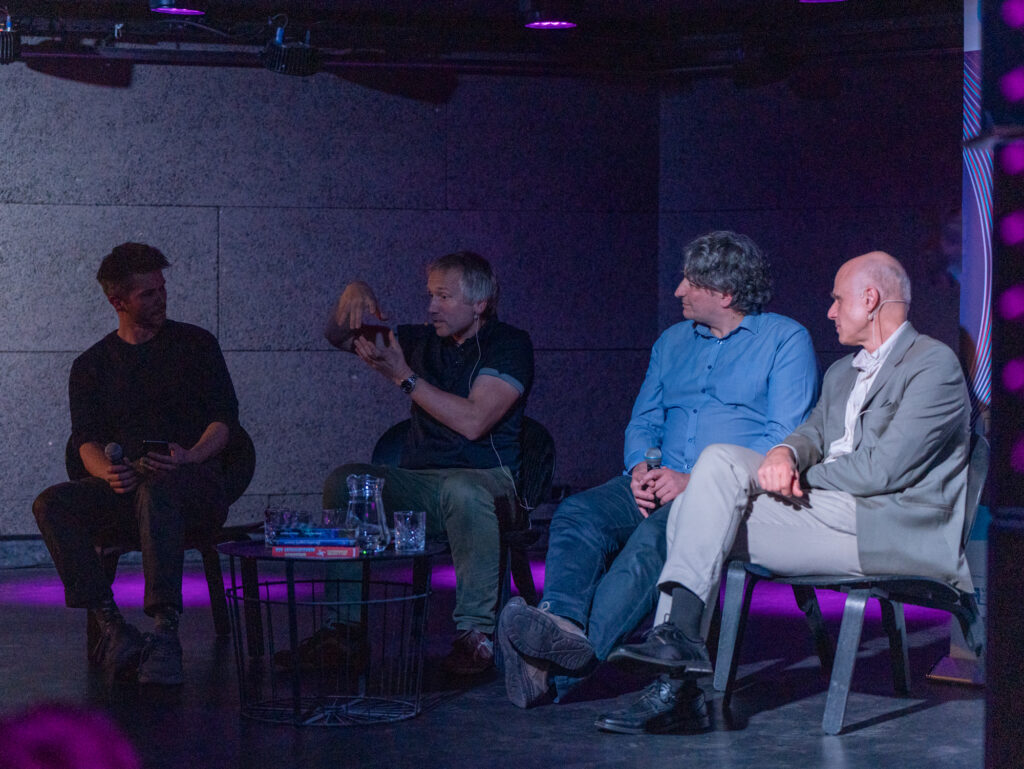
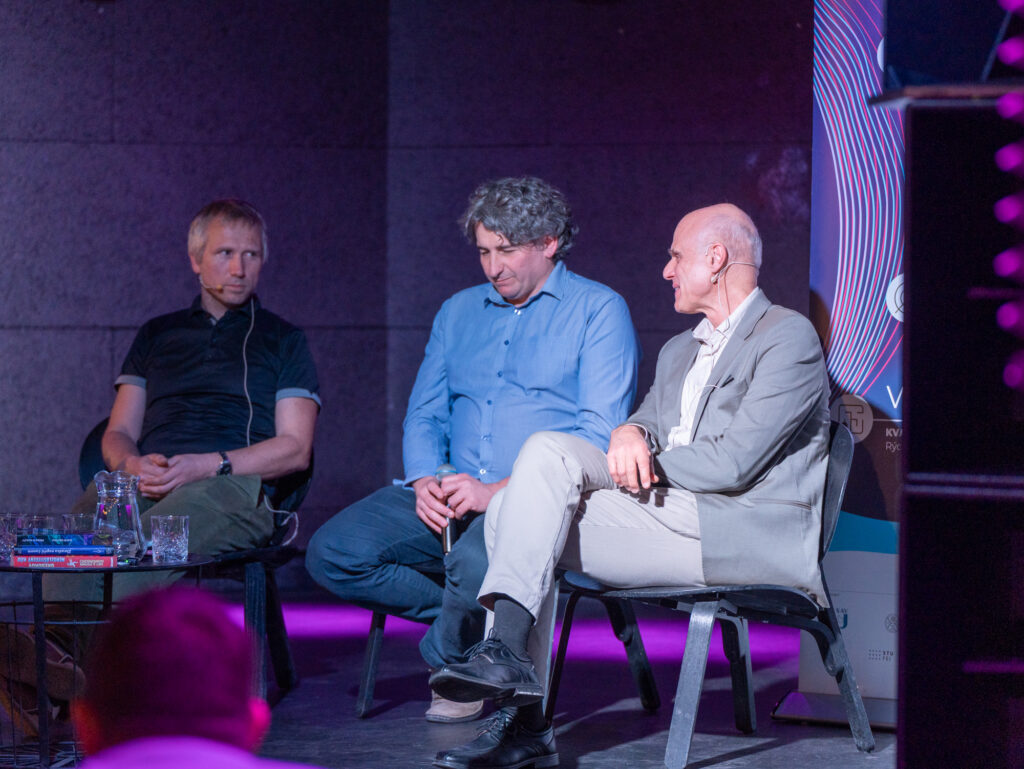
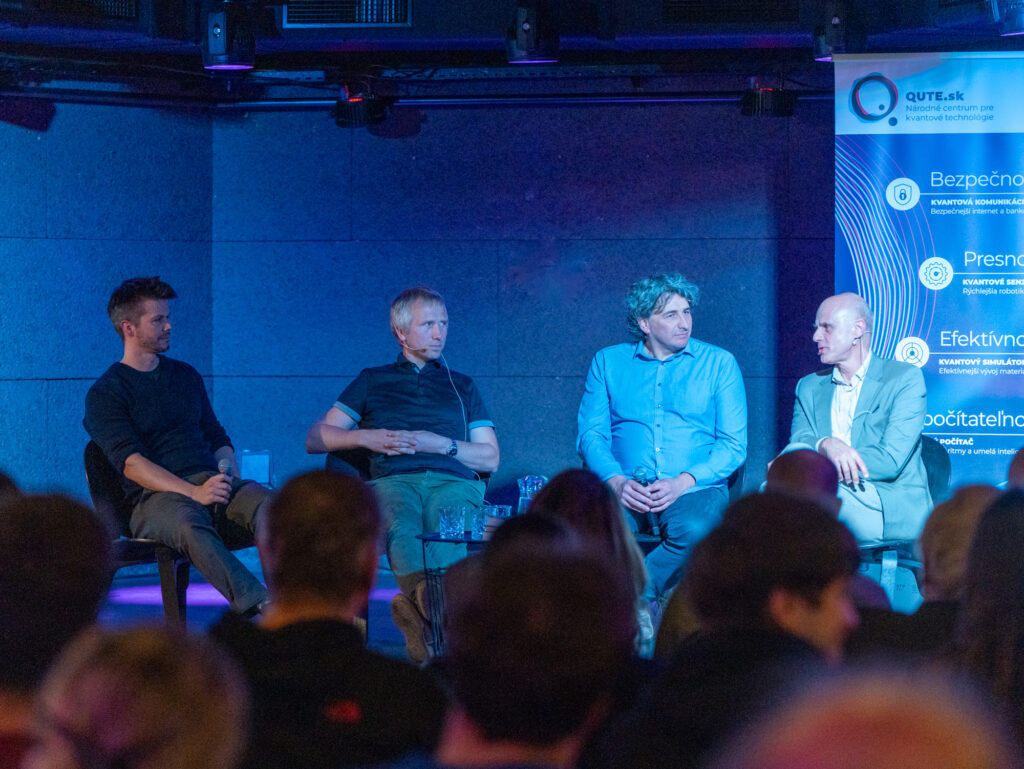
The concluding panel discussion, joined by Mário Ziman (Institute of Physics, Slovak Academy of Sciences), was moderated by Jaroslav Varchola (Kvantum Ideí) in a way that was both accessible and intellectually stimulating. The discussion brought together different approaches, comparing their advantages, limitations, and future prospects. By combining multiple scientific perspectives, it offered participants a more comprehensive view of how the future of quantum technologies is being shaped.
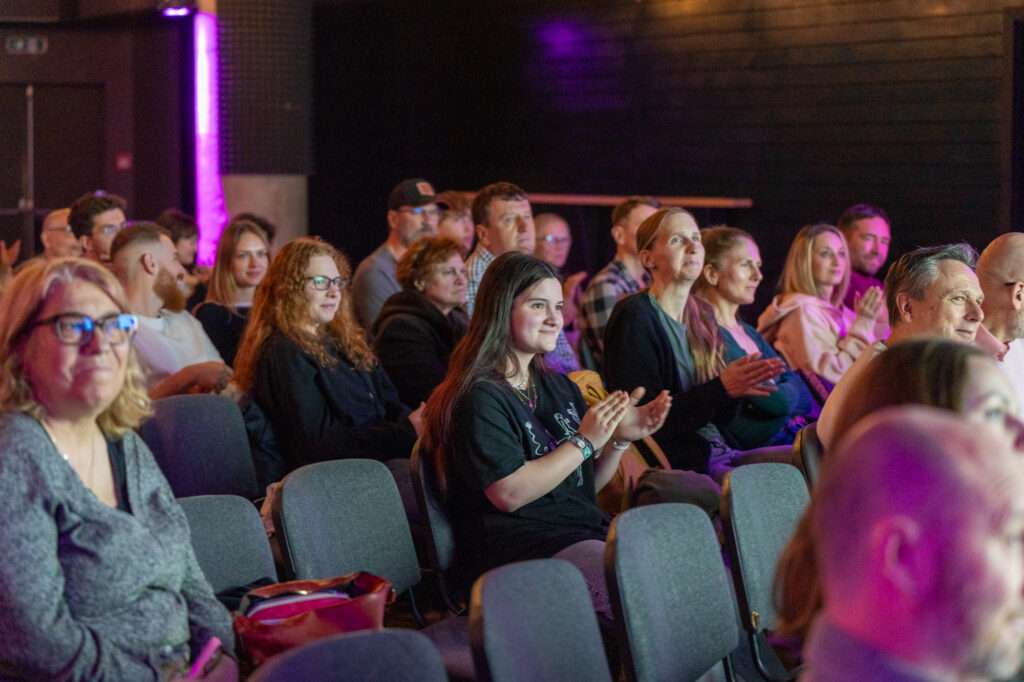
Participants evaluated the event very positively, particularly appreciating the balance between expertise, clarity, and the genuine enthusiasm of the speakers. Quantum Entanglements once again demonstrated that connecting cutting-edge science with open discussion has a strong place beyond the academic environment.
Interest in quantum technologies continues to grow, along with the questions researchers are now exploring. While this year focused on the search for the ideal qubit, the next may bring further steps toward its practical implementation. Quantum Entanglements will return in 2027 – perhaps bringing us even closer to a world where quantum technologies are no longer just a topic of discussion, but part of everyday life.
Gallery: