
Popularization of Quantum Technologies in 2025: eduQUTE Engaging the Public, Schools, and the Media
The year 2025, declared the International Year of Quantum Science and Technology by UNESCO, was exceptionally intense for the eduQUTE initiative. Alongside our research and educational activities, we continued to build on long-term efforts that we have been systematically developing for years in the field of quantum technology outreach. Throughout the year, we engaged the general public, secondary and university students, as well as media audiences – always with the goal of showing that quantum physics is not a distant abstraction, but a dynamically evolving field with tangible technological and societal impact.
World Quantum Day: a tradition we continue to develop
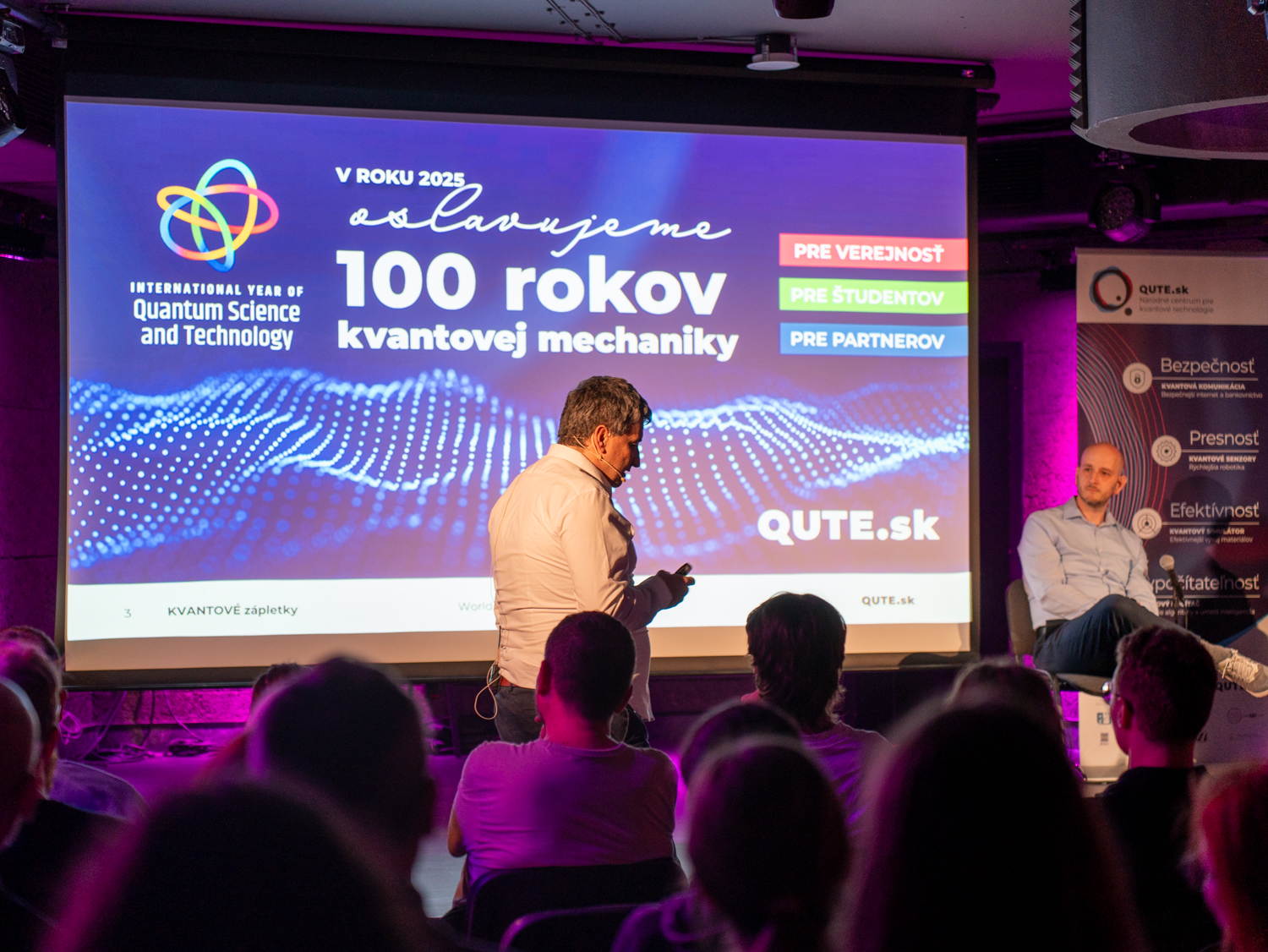
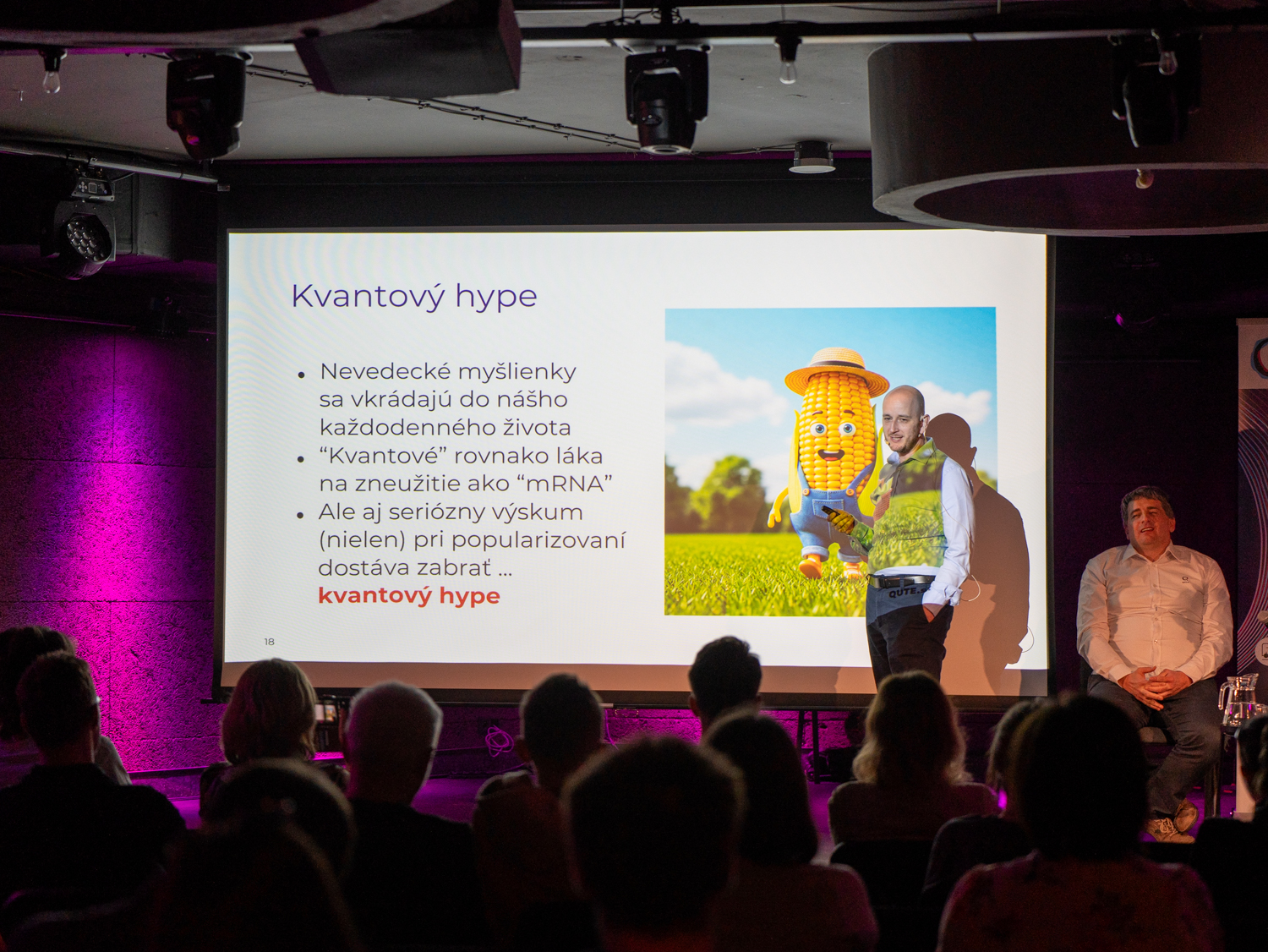
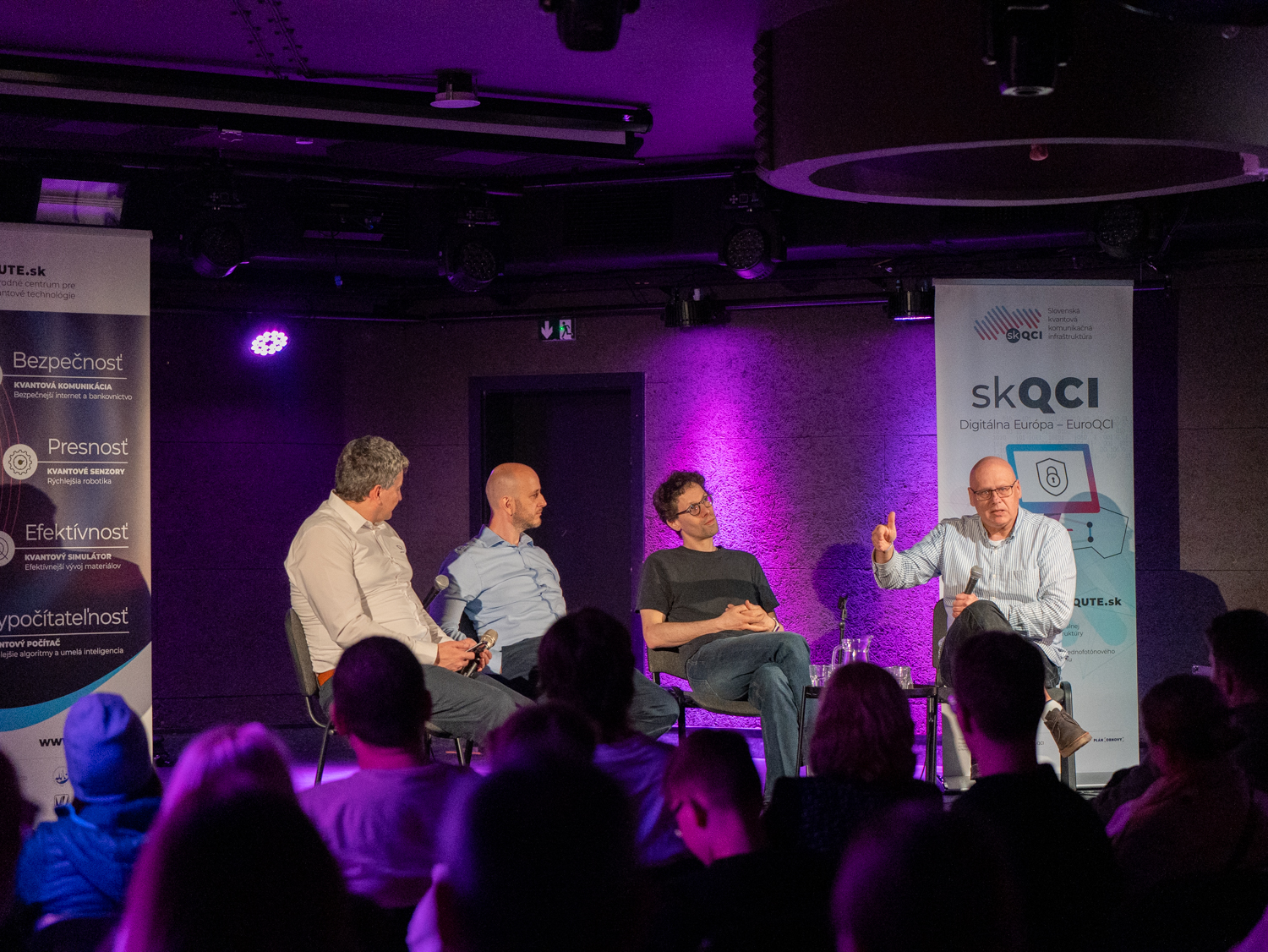
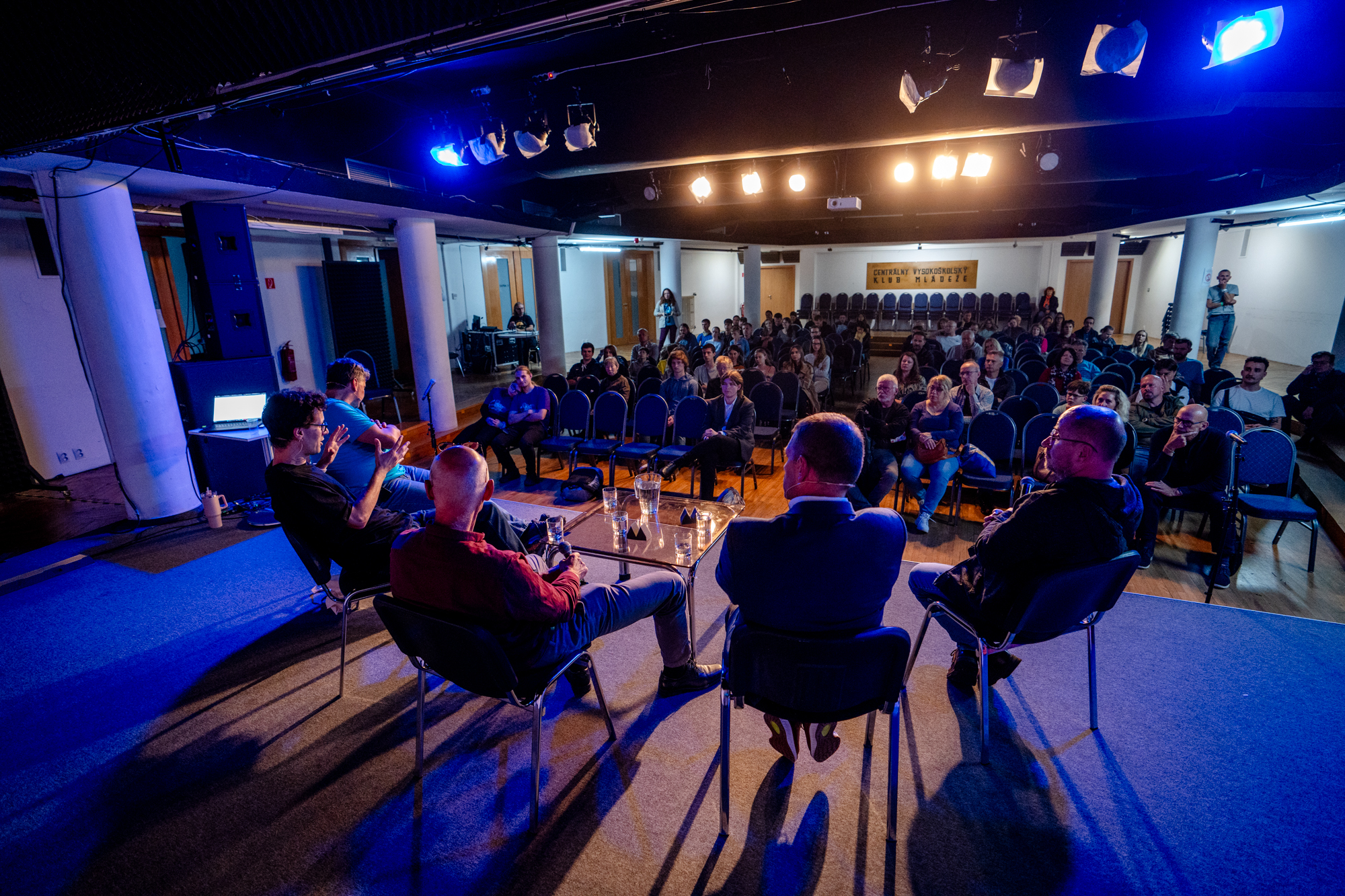
World Quantum Day took place on April 14, 2025, as our traditional annual event, which we plan to continue in the coming years. The event attracted approximately 100 visitors and provided space for calmer, more focused discussions on quantum physics and quantum technologies. The programme, featuring lectures by Daniel Reitzner, Daniel Nagaj, and Mário Ziman, focused on current trends in quantum computing, communication, and sensing, as well as on real-world applications of these technologies. World Quantum Day thus serves as a format for deeper dialogue with an audience interested in going beyond popular buzzwords and myths.
Researchers’ Night: a quantum zone for thousands of visitors
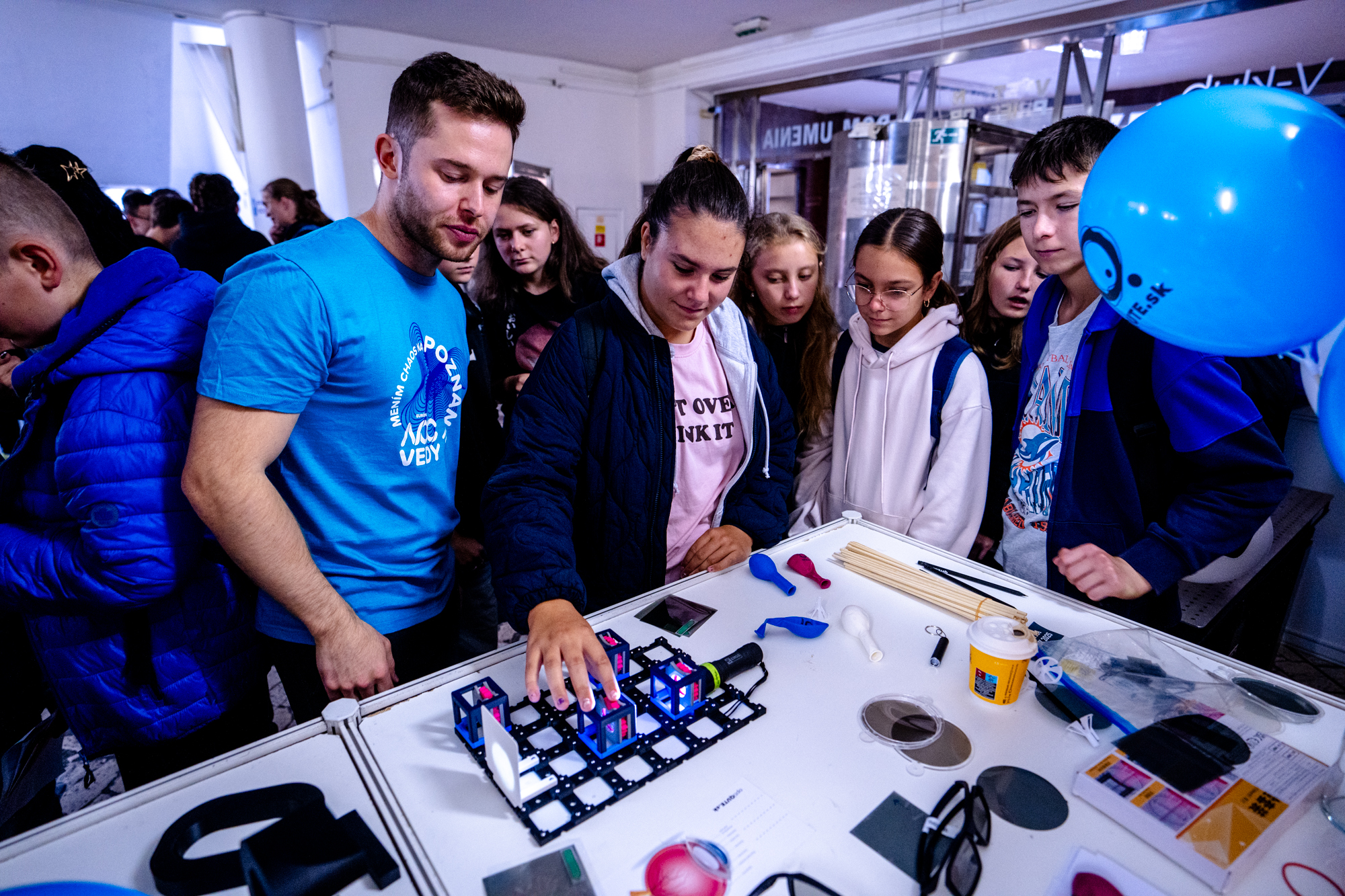
In contrast, European Researchers’ Night once again had a mass character in 2025. On September 26, we prepared a dedicated quantum zone for thousands of visitors at V-klub in Bratislava, presenting quantum technologies in an interactive and visually engaging form. Together with partners from the Slovak Academy of Sciences (Institute of Physics SAS, Institute of Electrical Engineering SAS), Comenius University, and Aricoma, we jointly created seven booths devoted to quantum and enabling technologies. Our aim was to engage also visitors without a technical background and to show that quantum physics is not merely an abstract theory, but the foundation of technologies that already influence communication, security, sensing, and computation. A key element was connecting cutting-edge research with accessible explanations – without reducing it to myths, but with an emphasis on intuition and context.
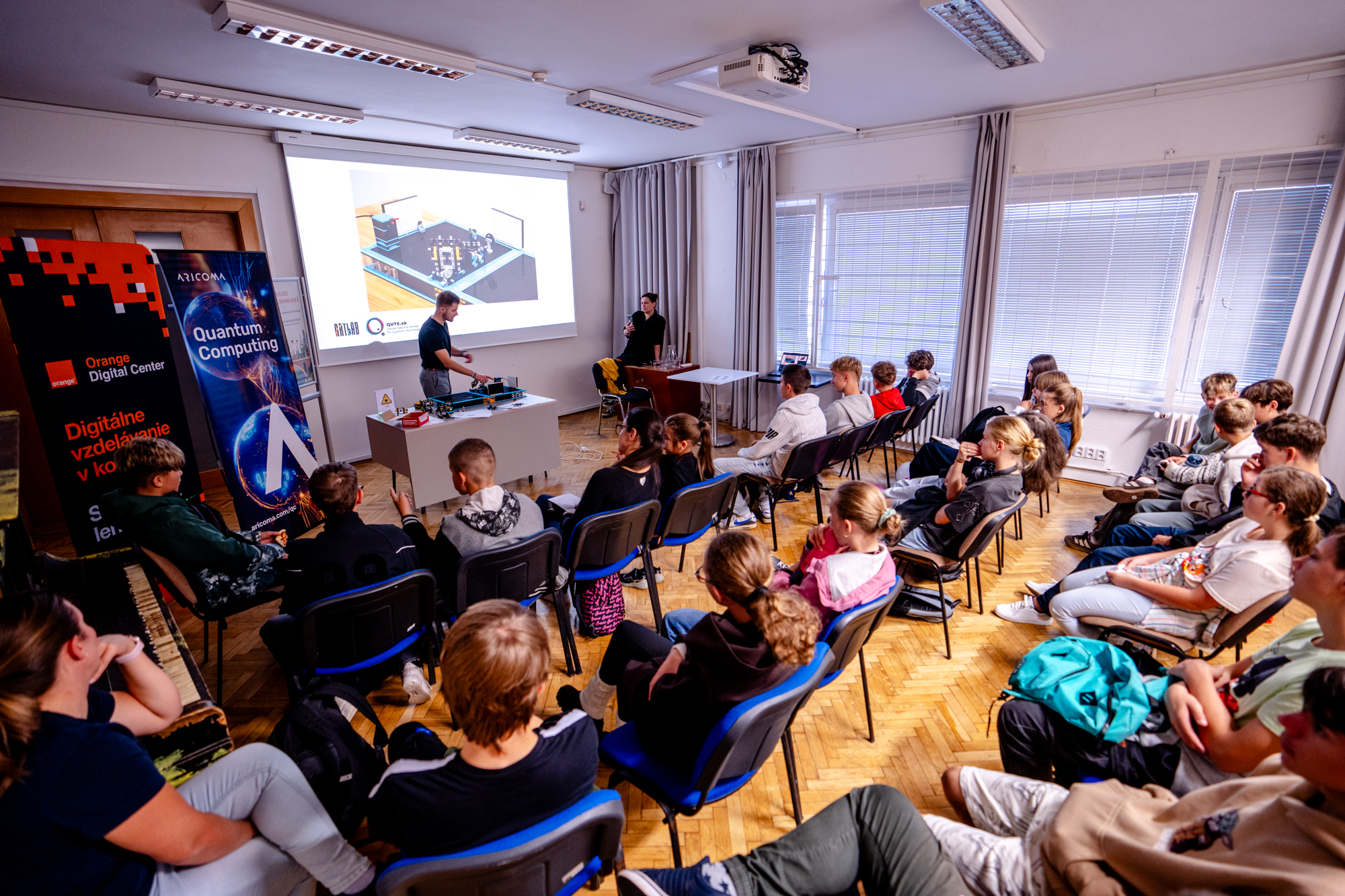
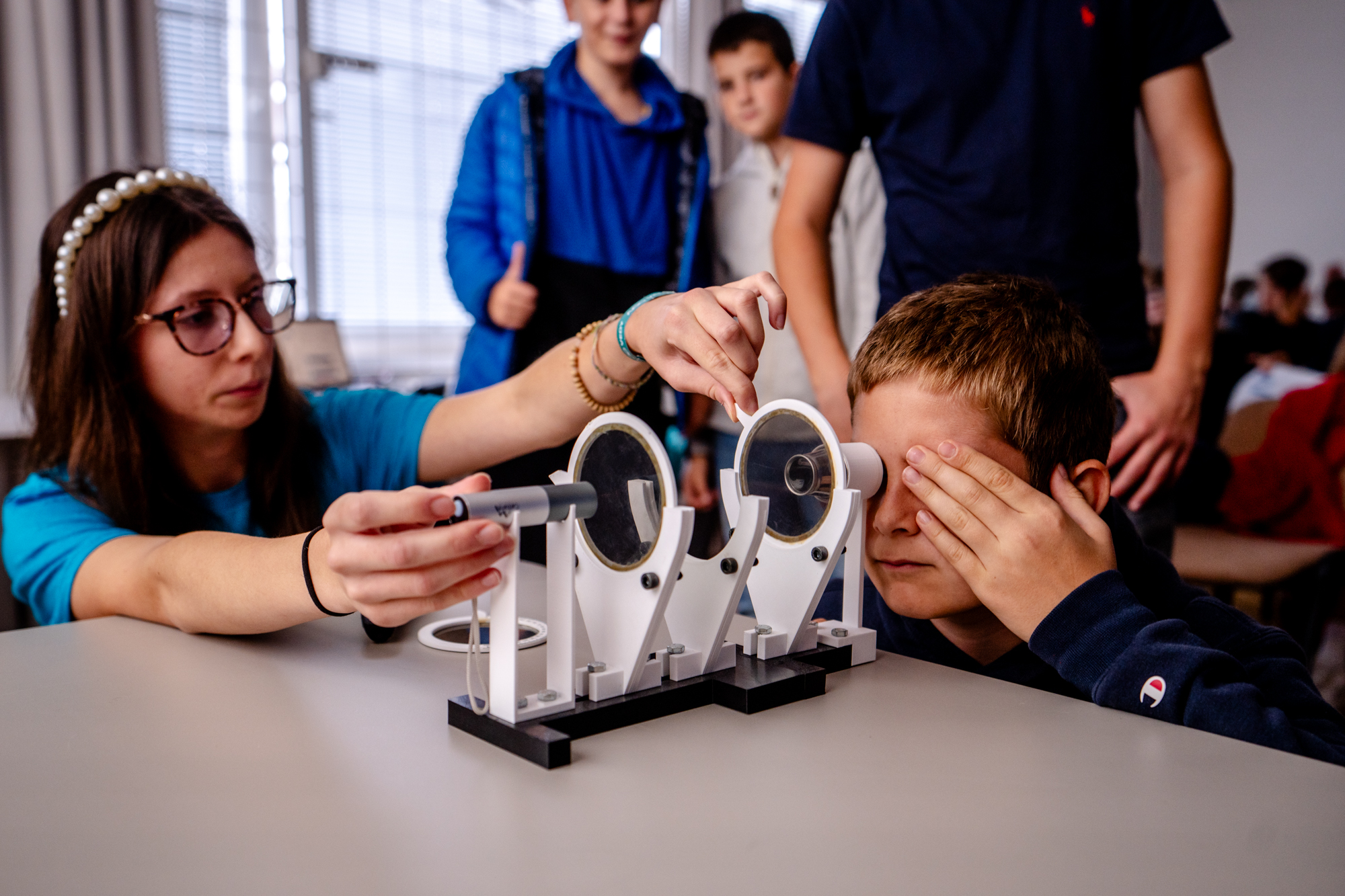
Photo: © European Researchers’ Night, Šimon Lupták


Expedition Quantum Slovakia: lectures across the regions
Before the start of the regional series, on June 20, Mário Ziman gave a talk entitled “Quantum Internet” at the event Večer zvedavých (NERD NITE) in Bratislava, held at Kafe Lampy, as one of three speakers. For us, outreach does not end in the capital. Within the Expedition Quantum Slovakia initiative, we continued delivering lectures beyond Bratislava. In November 2025, at the invitation of the Regional Observatory and Planetarium of Maximilian Hell, we visited Banská Bystrica and Žiar nad Hronom, where we presented quantum technologies to students, educators, and the general public. Lectures by Andrej Gendiar focused on quantum physics in curved spacetime, connecting quantum mechanics with gravity and cosmology, and demonstrating that quantum questions concern not only the microworld, but also the very structure of space and time.
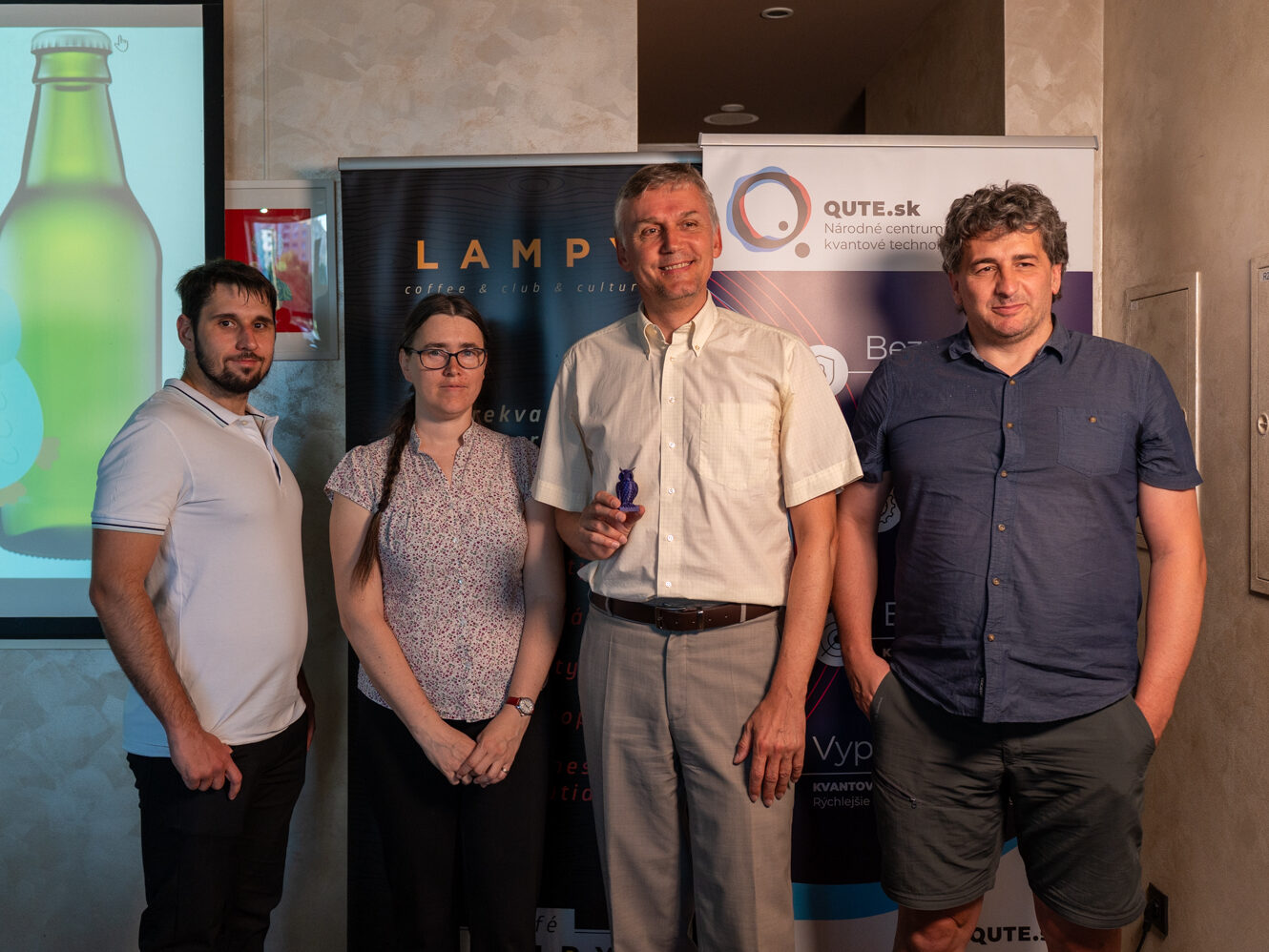


The speakers were Martin Stolár, Zuzana Stožická, and Mário Ziman, who stood in for Lukáš Slodička.
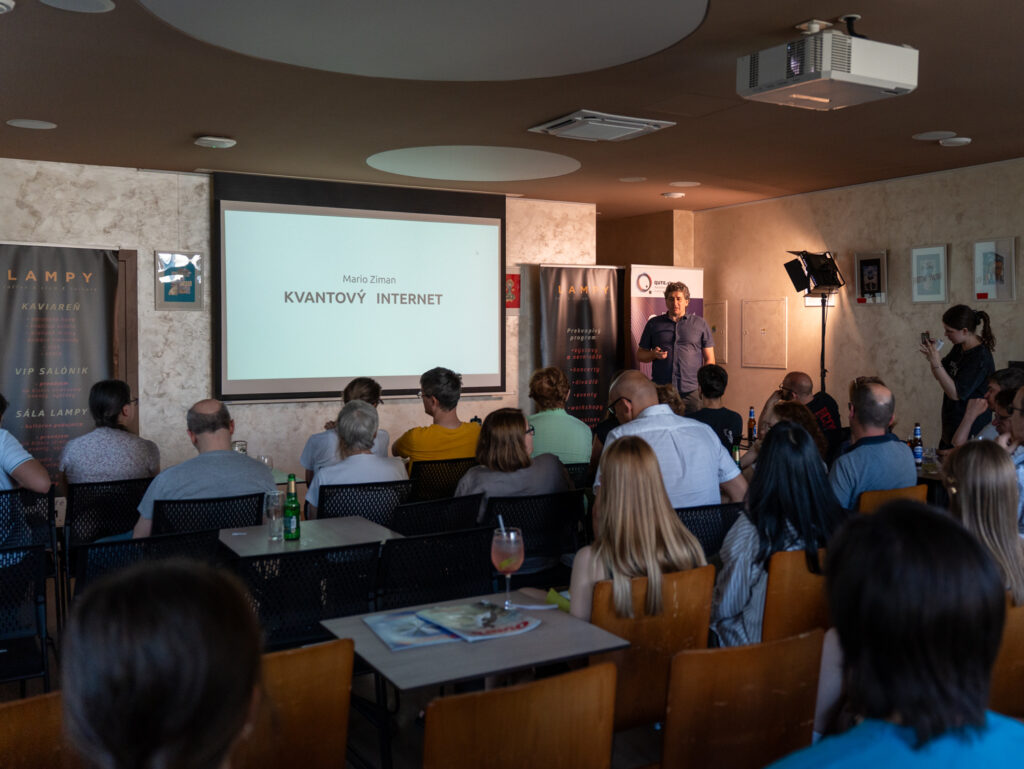
Mário Ziman’s lecture at the event Večer zvedavých (NERD NITE).
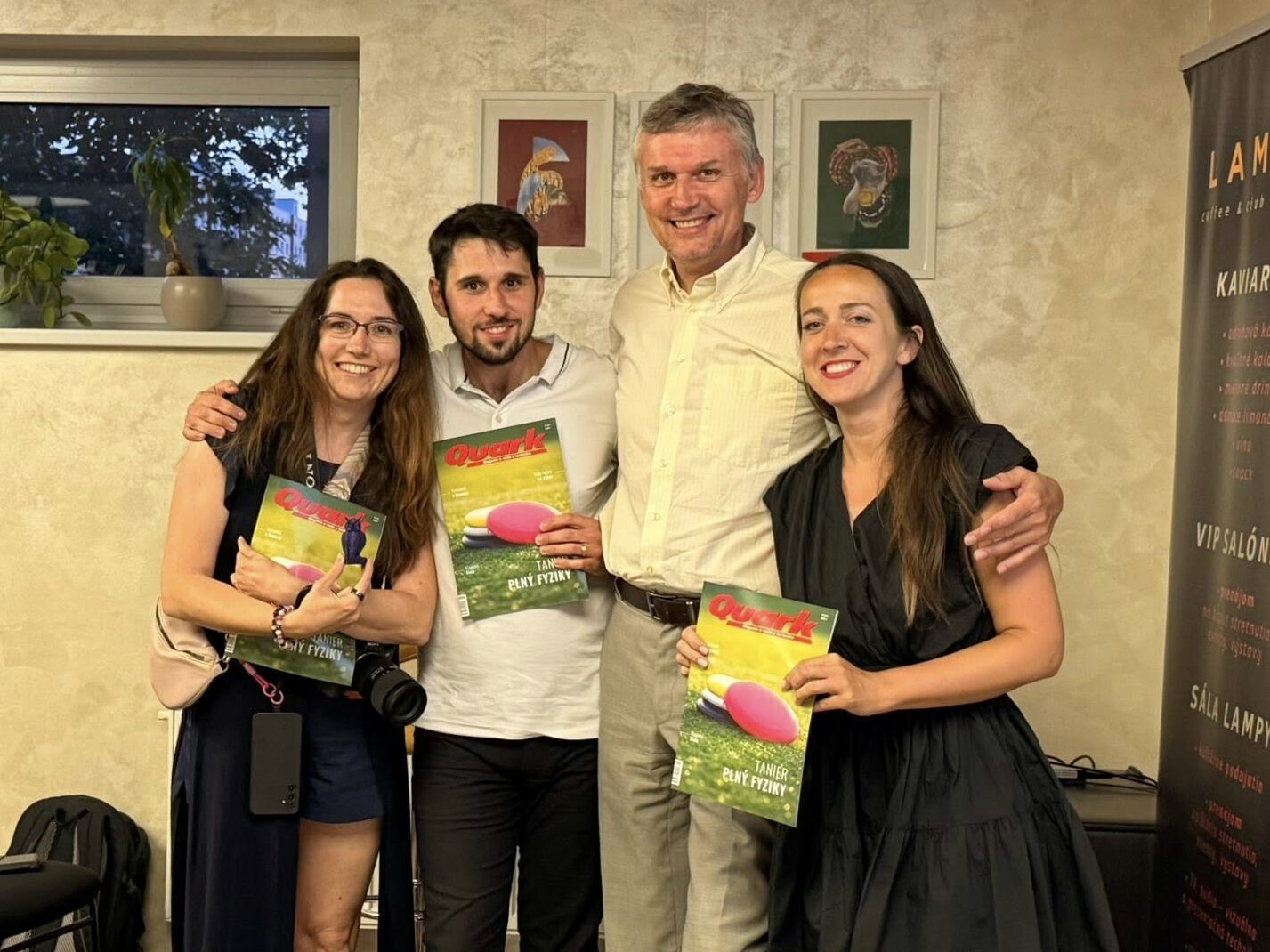
The winners of the final knowledge quiz. Photo: Kafe Lampy.

Lecture by Andrej Gendiar in Banská Bystrica: quantum physics in curved spacetime as a bridge between the microworld and cosmology.
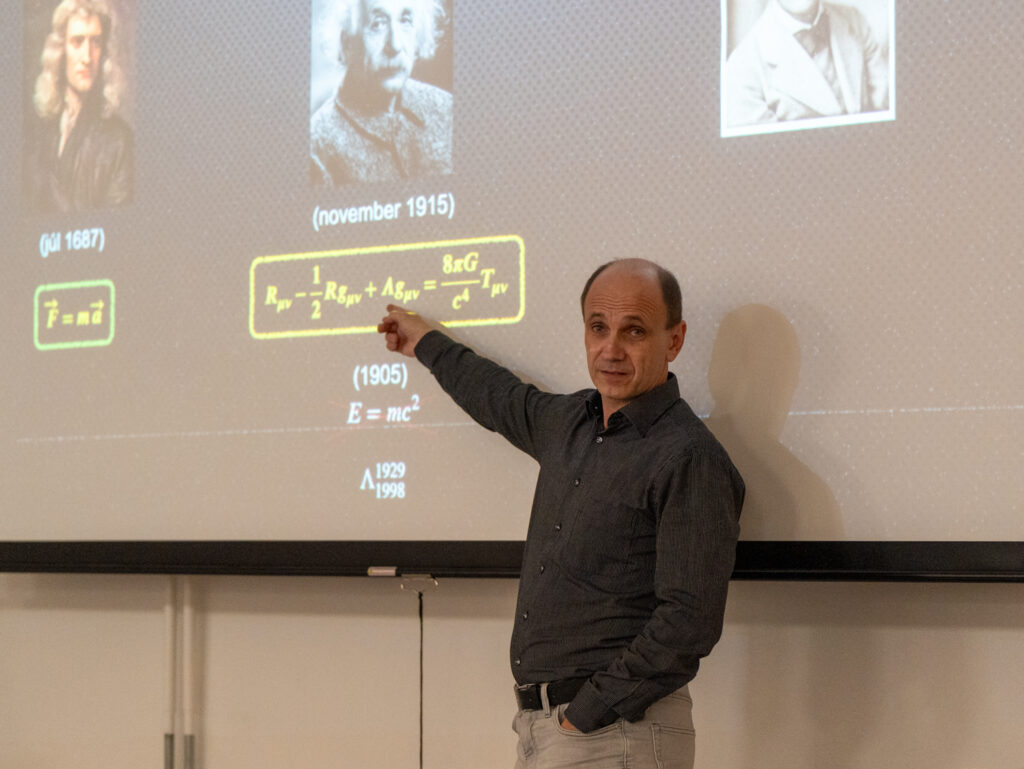
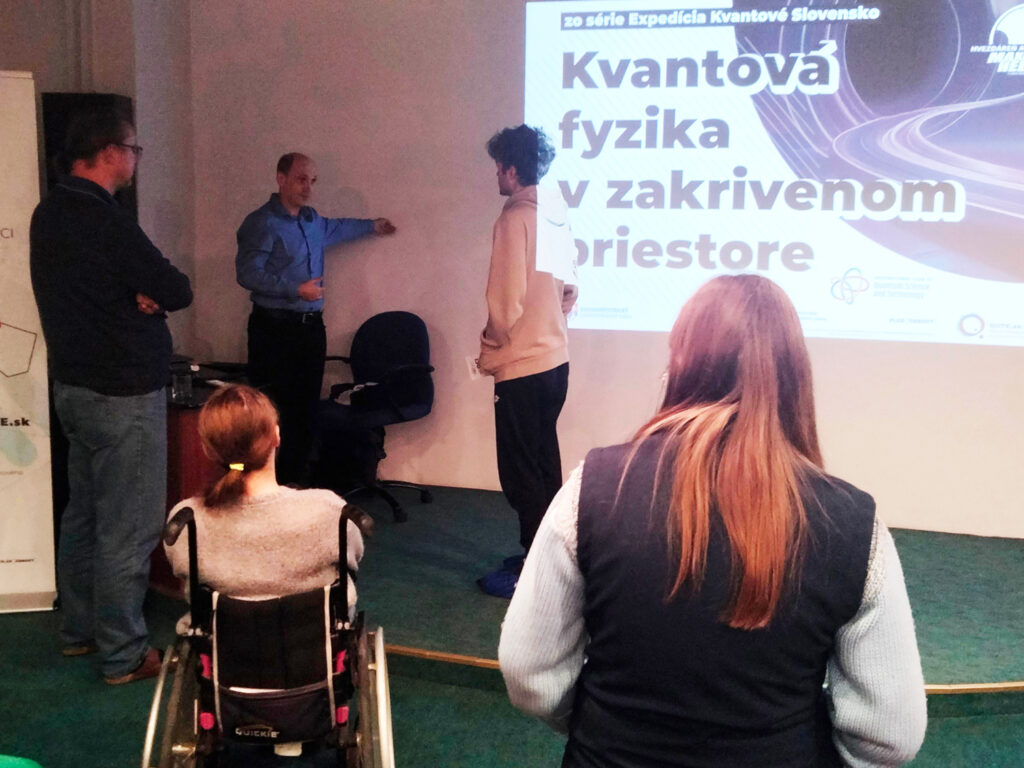
The same lecture by Andrej Gendiar in Žiar nad Hronom.
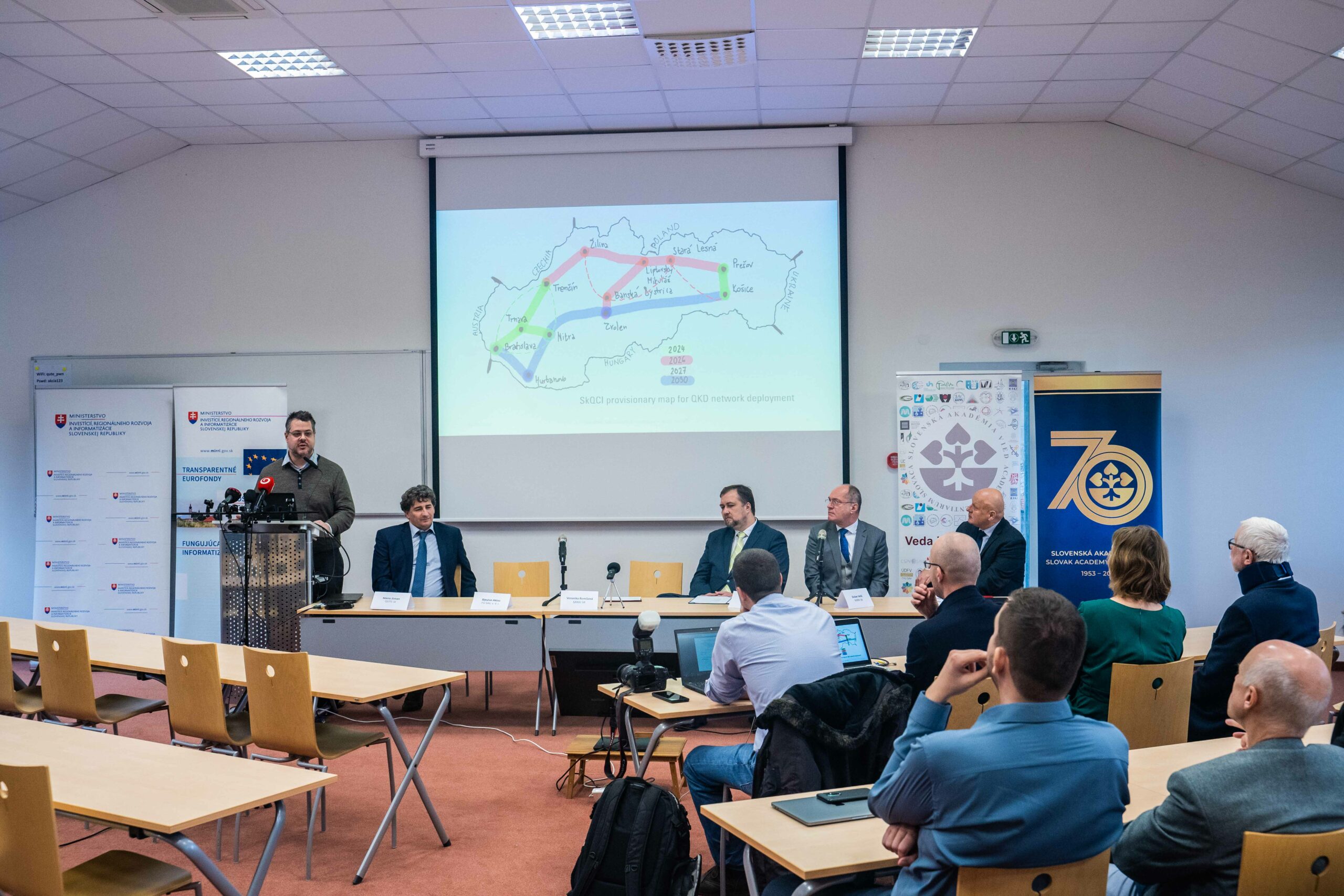
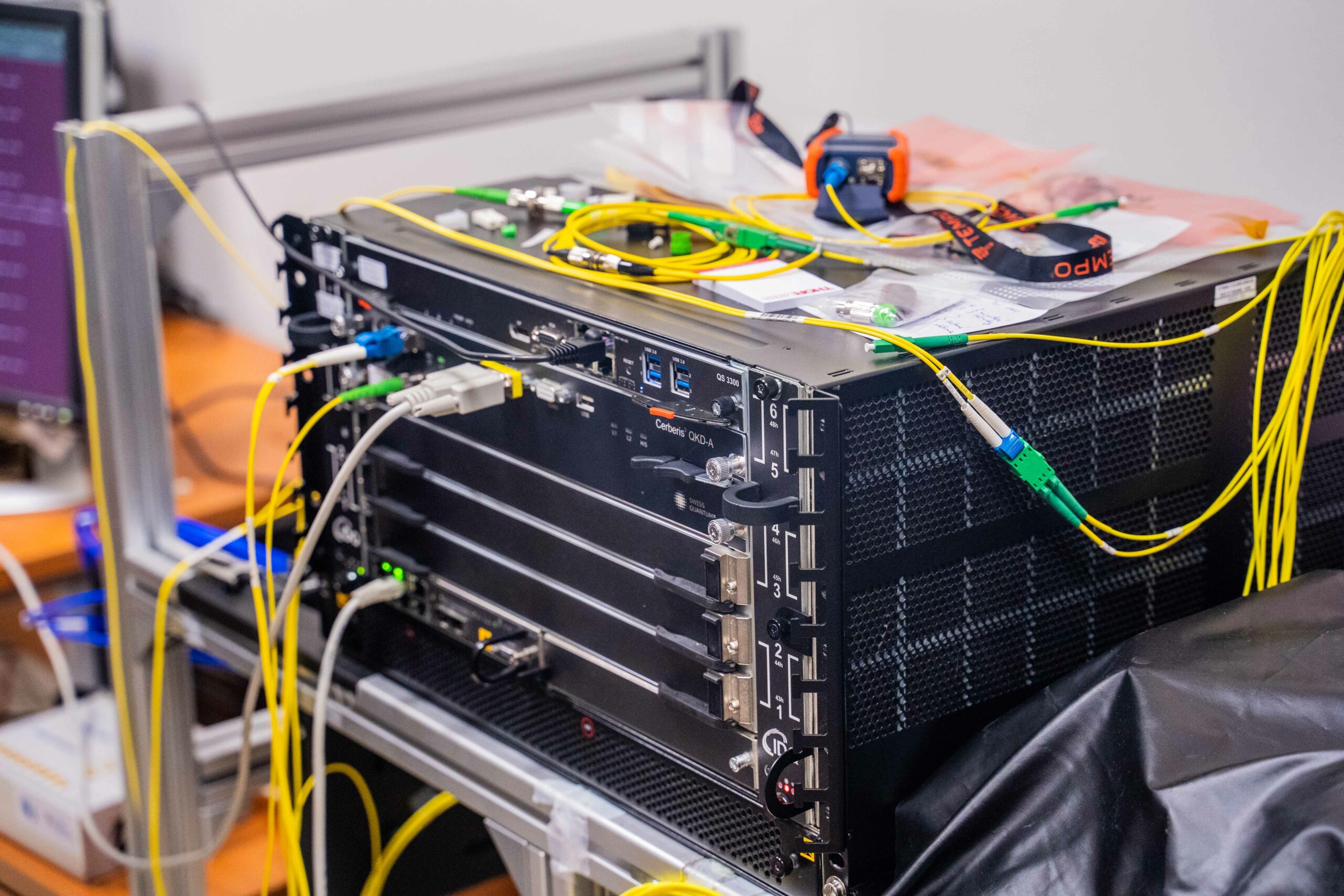
At the end of the year, we also visited eastern Slovakia – Košice and Prešov. On December 11, 2025, during an event organized by Pavol Jozef Šafárik University in Košice, we demonstrated the first quantum-secured communication link in Slovakia to an audience of around 200 high-school students. On the same day, our activity was complemented by a public lecture titled Quantum Internet in Prešov, explaining the principles of quantum communication, secure information transfer, and future networks based on quantum protocols. Together, these events showcased the breadth of quantum topics – from fundamental physics to technological applications.

More than 200 secondary school students observe a demonstration of Slovakia’s first quantum-secured communication link between Košice and Prešov.
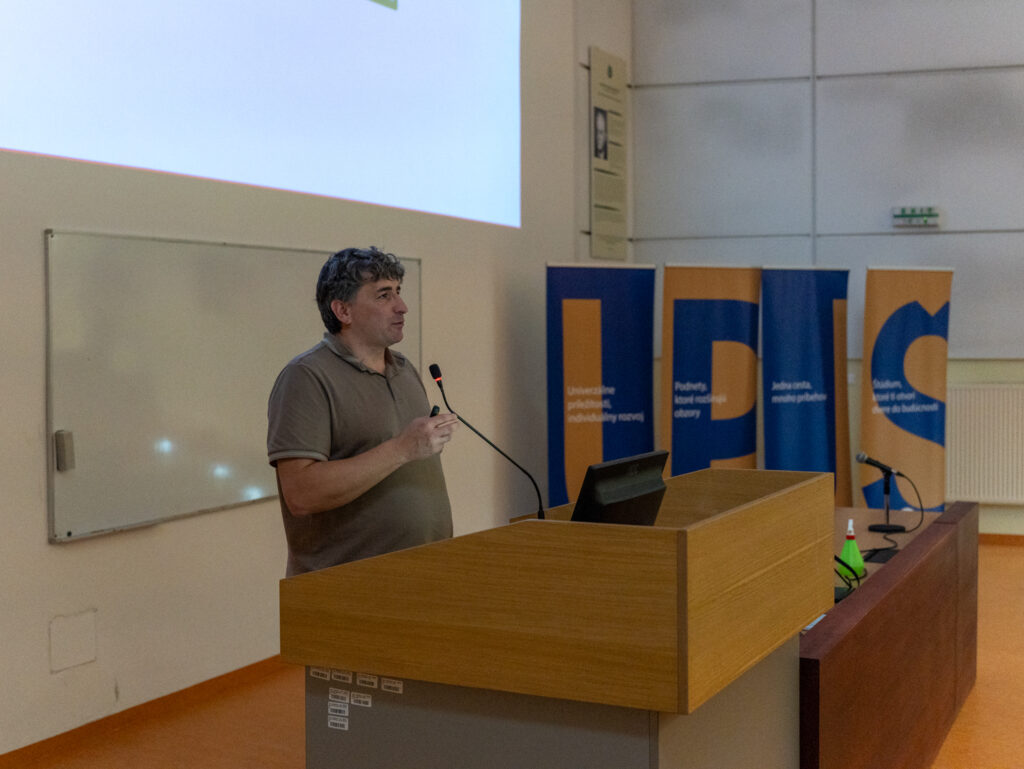

Mário Ziman’s Quantum Internet lecture at the P. O. Hviezdoslav Regional Library in Prešov, explaining how quantum communication works.
University lectures: quantum technologies as a glimpse into the future
A special chapter was formed by lectures at universities, complementing standard curricula and providing broader technological and societal context. At Faculty of Electrical Engineering and Information Technology STU in Bratislava, a final lecture within the course Fundamentals of Computers was delivered on December 9 to approximately 250 first-year engineering students. Mário Ziman’s lecture on quantum computers offered a technical yet accessible view of how computing is changing, the physical limits it faces, and why quantum technologies are not merely a “faster version” of classical machines, but an entirely new computational paradigm. Emphasis was placed on connections between physics, computer science, and industry – fully in line with linking academic education to real-world practice.
A particularly strong interdisciplinary dimension was brought by Andrej Gendiar’s lecture on October 21 at the Academy of Fine Arts and Design in Bratislava, where the starting point was matter itself. From basic properties of substances and their structure, the discussion moved to materials, their physical properties, phase transitions, colour, oxidation processes, and material behaviour during technological processing. The lecture demonstrated that physics and materials science have a profound influence on design and creative practice.
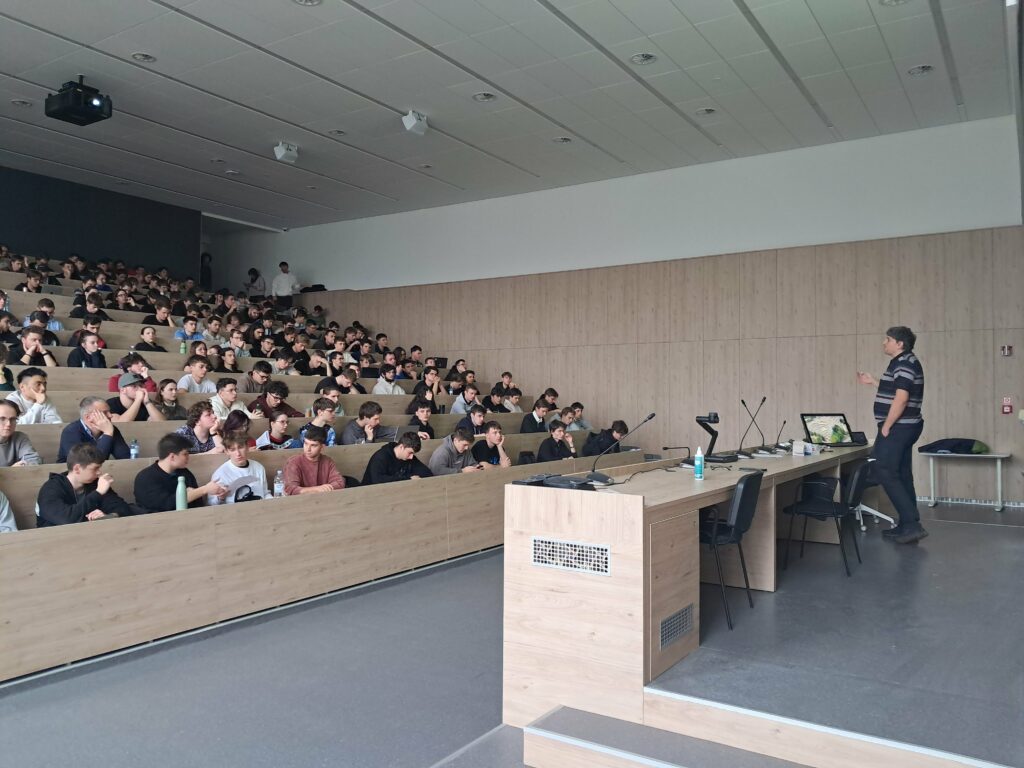
Final lecture within the course Fundamentals of Computers by Mário Ziman at FEI STU. Photo: © Richard Balogh
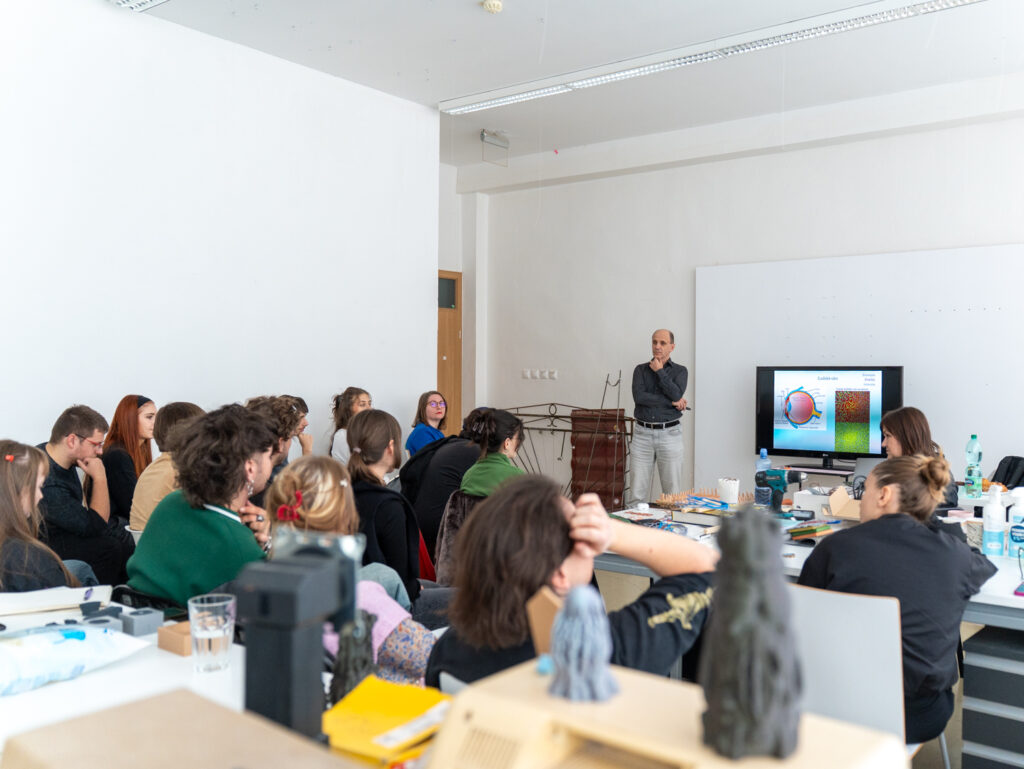
Lecture by Andrej Gendiar at the Academy of Fine Arts and Design (VŠVU) for design students on matter, materials, and physics as the invisible foundation of design and the creative process.
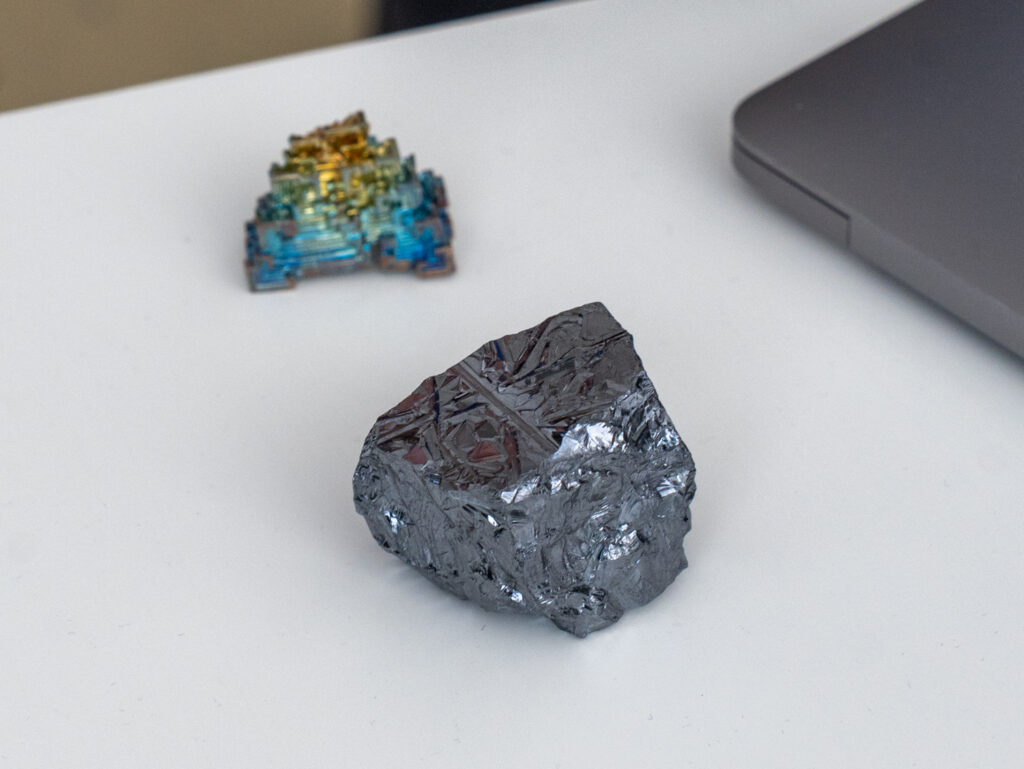
Secondary schools: from a virtual classroom to in-person visits
Working with high-school students has long been an important focus of eduQUTE. In addition to the Kvanta – the virtual classroom, where students regularly visit us, we also visited several schools in 2025 in person. Lectures and discussions took place, for example, at GAMČA within the “Older to Younger” project, where Marián Janík delivered a lecture on quantum computing, its principles, and potential future applications. At the Gymnasium in Rimavská Sobota, Andrej Gendiar introduced students to curved spacetime, highlighting connections between modern physics, geometry, and cosmology. These encounters repeatedly confirm that even demanding topics can be communicated clearly and without unnecessary simplification.
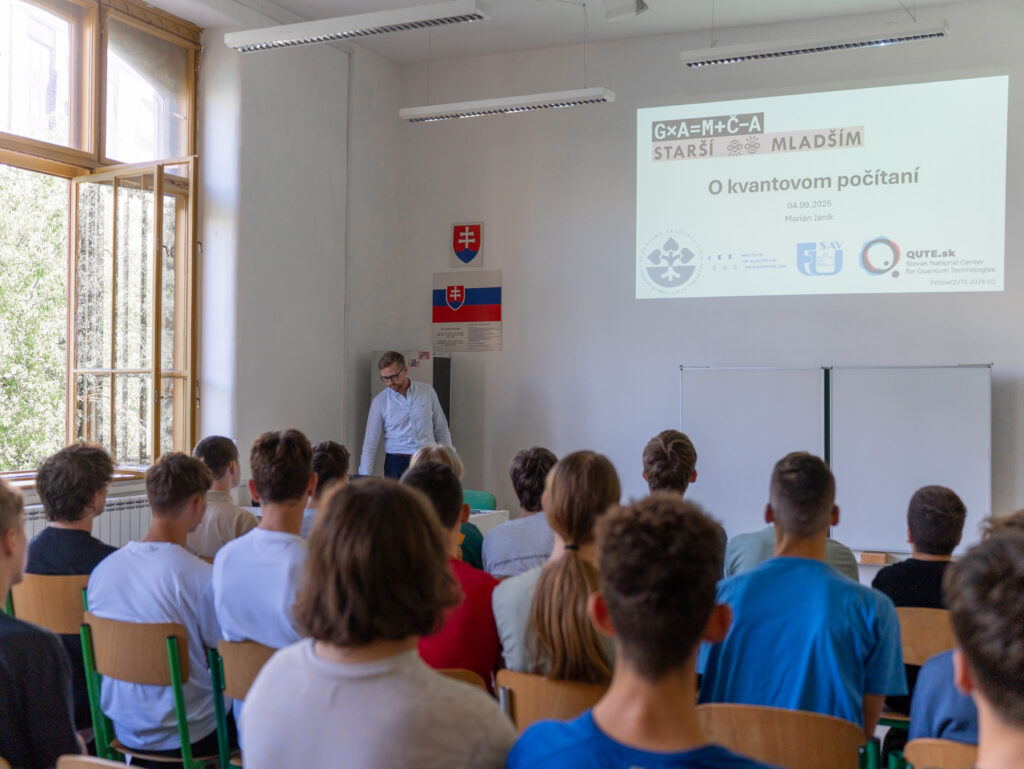
Marián Janík presents quantum computing to GAMČA students as part of the Older to Younger project.
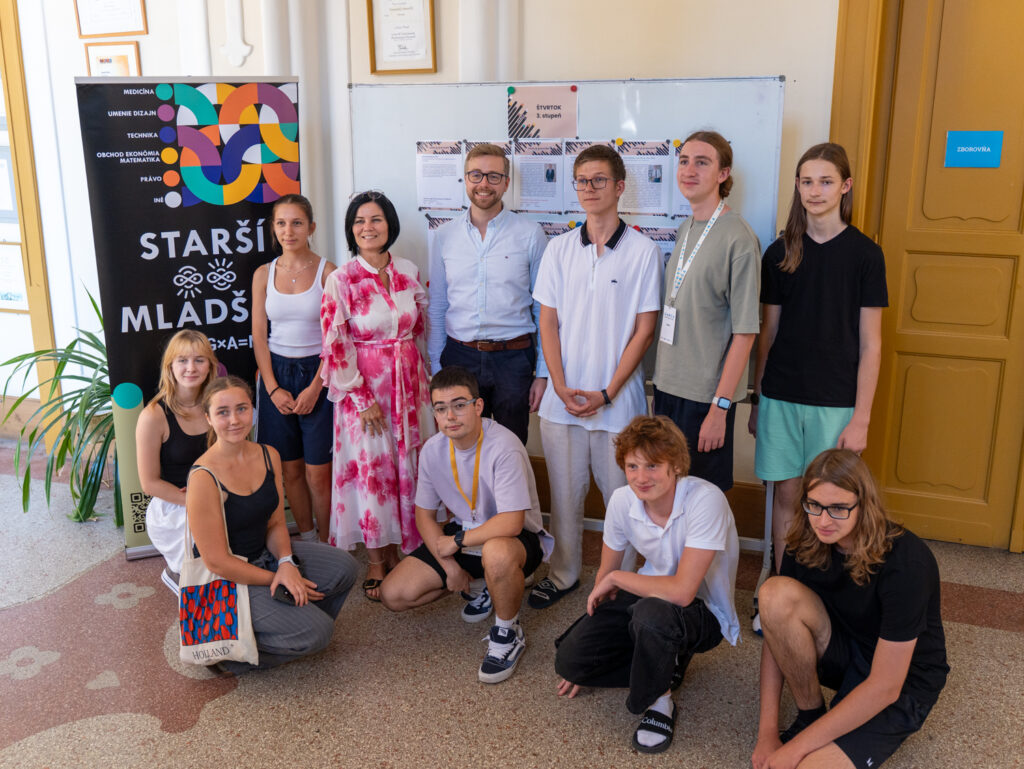
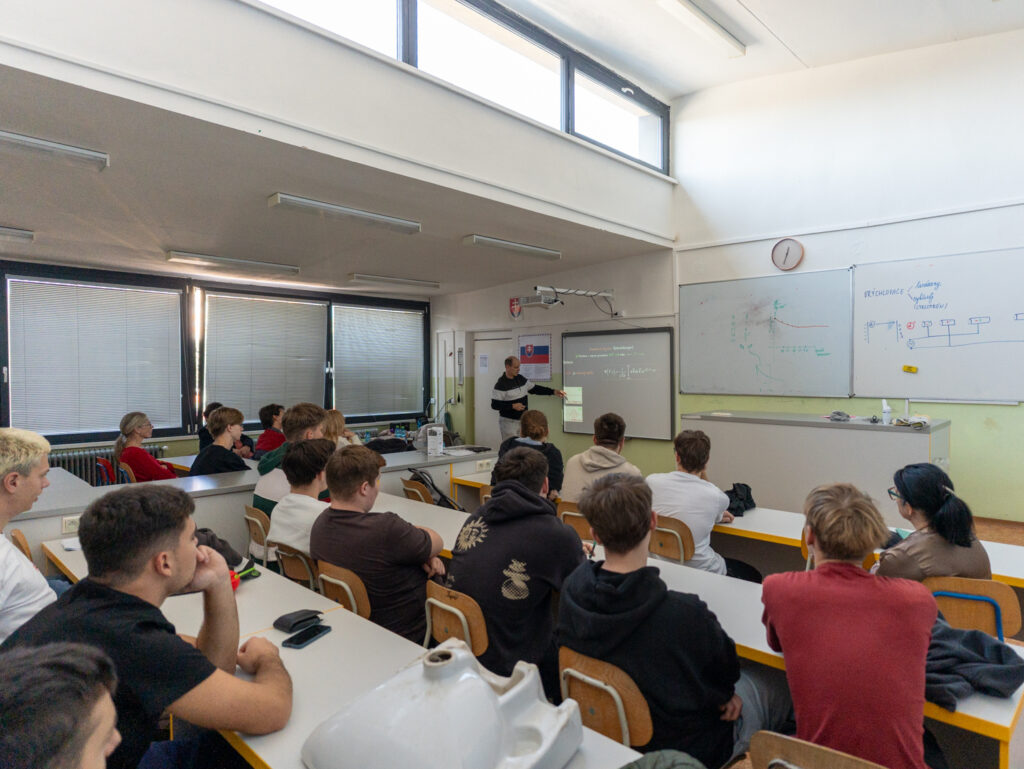
Lecture on curved spacetime at Ivan Krasko Gymnasium in Rimavská Sobota – modern physics as a connection between mathematics, geometry, and the universe.
Quantum technologies in the media and podcasts
The Year of Quantum naturally became one of the topics we addressed in the media—but not the only one. Interviews and podcasts touched on the broader context of quantum technologies, their development, and their significance for society. Media appearances allowed us to reach audiences that do not usually encounter quantum topics in academic or school environments.
- September 9, 2025 – Interview in Nočná pyramída with Mário Ziman, Rádio Slovensko, STVR
- September 17, 2025 – Podcast Veda na dosah – Mário Ziman: The Year of Quantum, CVTI SR
- September 26, 2025 – Podcast Kvantum Ideí: On Quantum Physics with Prof. Bužek
What comes next in the Post-Quantum Year?
The year 2025 was exceptional – but it certainly does not mark an end. Experiences from public events, schools, and media have reinforced our conviction that the demand for clear, honest communication of quantum technologies is growing. eduQUTE therefore plans to continue its outreach activities even after the International Year of Quantum, with a focus on scientific accuracy, regional engagement, and connecting quantum science with the real world. Quantum technologies will not become part of our future on their own – they need people who understand them, and those people must be engaged already today.
If you are interested in becoming part of our outreach activities, join us and follow us on social media.
